“I just want people to know, he was a great, sweet, sensitive, strong, compelling man with a great sense of humour, with eyes that danced.”
Mrs LaMotta
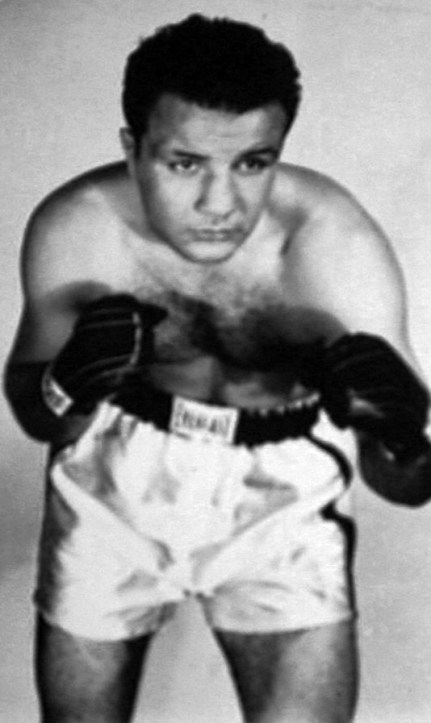
Jake LaMotta, the uncompromising fighter portrayed by Robert De Niro in “Raging Bull”, has died aged 95. Born 10 July, 1922 to Italian parents in the Bronx area of New York City, he took up boxing after being rejected by the US military due to a medical condition.
LaMotta won the World Middleweight title on June 16, 1949 in Detroit, Michigan, defeating Frenchman Marcel Cerdan.
A rematch was arranged, but while Cerdan was flying back to the United States to fight the rematch, his Air France Lockheed Constellation crashed in the Azores, killing everyone on board.
As “soft power goes,” Piaf and Cerdan were really the number one couple on the planet. It would take about 5 years to replace them with the wedding of Marylin Monroe and Joe DiMaggio.
I will not go into the details of why I post this news on this INTEL blog. The time will come. For now, I will just tell you that Hubble — Yes, this Edwin Hubble — claimed he used to spare (/train) with Marcel Cerdan. The late John Bahcall told me to ignore this story as utter nonsense… — Follow us on Twitter: @INTEL_TODAY Continue reading →