
“Above all, I would teach him to tell the truth. Truth-telling, I have found, is the key to responsible citizenship. The thousands of criminals I have seen in 40 years of law enforcement have had one thing in common: Every single one was a liar.”
J. Edgar Hoover
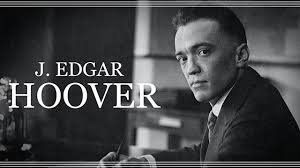
August 22 2026 — Though never elected to any office, for nearly 50 years J. Edgar Hoover’s power was unmatched. As head of the FBI, he knew what everyone else wanted to keep hidden. Hoover kept the world’s largest collection of pornographic materials which he used for his own pleasure and to blackmail anyone he did not like. Follow us on Twitter: @INTEL_TODAY
RELATED POST: FBI Experts : Monkey Science in Monkey Courts?
RELATED POST: Remembering Dr. Martin Luther King (January 15 1929 – Assassinated April 4 1968) — The FBI Suicide Letter
RELATED POST: FBI PSA : “Think Before You Post” — FLASHBACK : “The Helsinki Warning”
RELATED POST: “Evidence”: The cultural differences between the FBI and the CIA
RELATED POST: The Dark Past of Special Prosecutor Robert Mueller — The Bulger Gang, Lockerbie, Anthrax… An Exceptional Failure All Round.
RELATED POST: 70 Years Ago — Did Richard Nixon Frame Alger Hiss? [Dec. 6 1948 – The Pumpkin Papers]
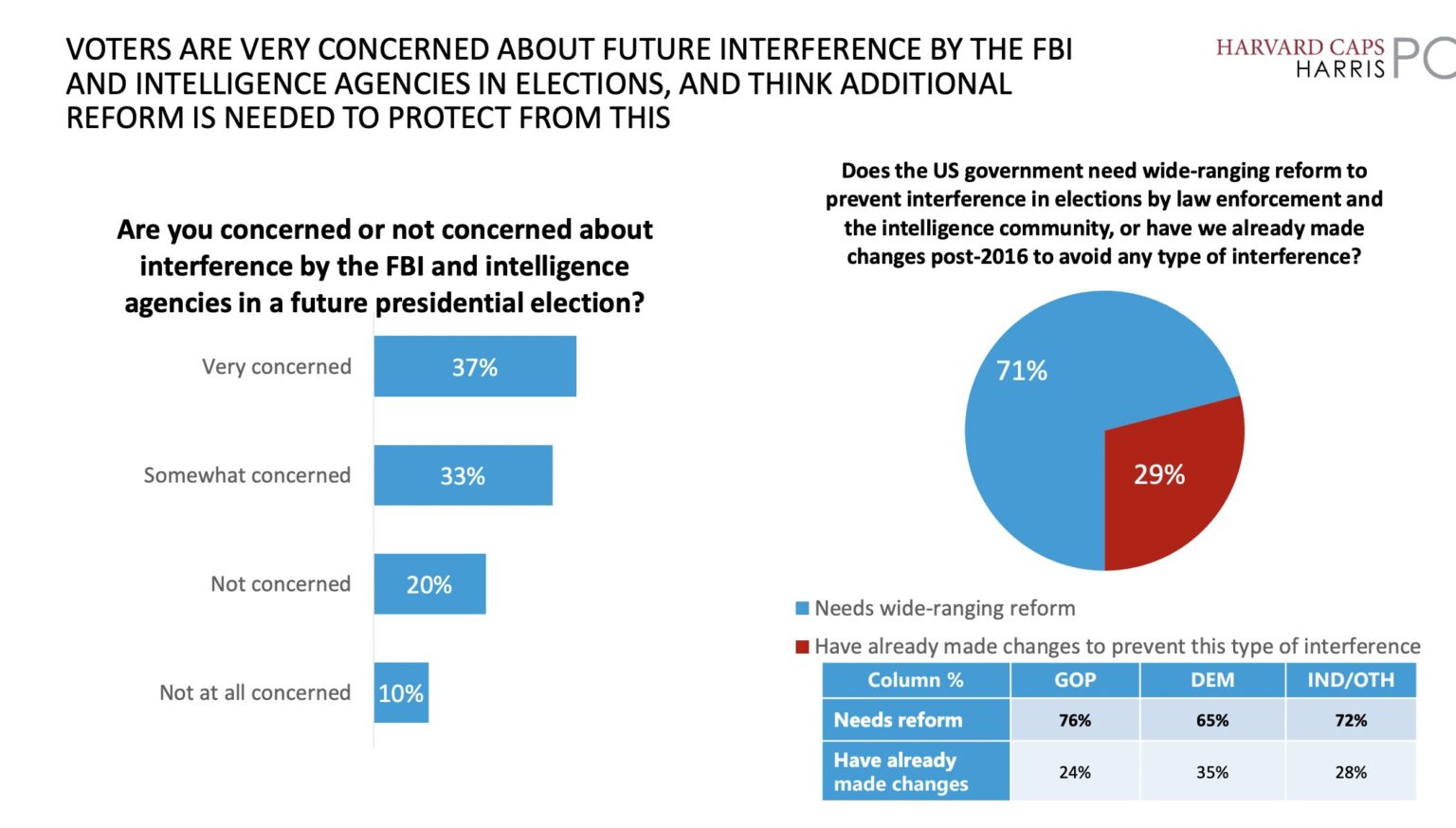
UPDATE (August 22, 2026) — Public trust in the federal government is near its lowest level in the modern history of polling, while political polarization has increasingly shaped perceptions of federal law enforcement.
The Bureau’s leadership has not escaped that polarization. FBI Director Kash Patel remains a deeply divisive figure. A February 2026 Rasmussen survey found 40% of likely voters viewing Patel favorably and 38% unfavorably, with 21% undecided.
These numbers illustrate how difficult it has become for the FBI’s leadership to command broad confidence across the political spectrum.
Is the FBI still perceived as an institution whose conclusions are determined primarily by evidence and professional judgment — or increasingly as an institution viewed through the political loyalties of those who observe it? The answer is complicated.
Some of the Bureau’s most controversial judgments have subsequently acquired greater credibility. Others have been seriously challenged.
COVID-19 origin
The FBI’s position on the origin of COVID-19 is one of the cases in which the Bureau’s credibility has arguably improved with time. In 2023, Director Christopher Wray stated that the FBI had long assessed that the pandemic was likely the result of a laboratory-associated incident in Wuhan, while emphasizing that this was an intelligence assessment rather than a definitive conclusion. The lab-leak hypothesis remains unproven, but it can no longer reasonably be dismissed as fringe speculation. In this instance, the FBI’s willingness to maintain a controversial assessment despite the prevailing political and scientific sensitivities arguably strengthens, rather than weakens, its credibility.
Former Fauci adviser David Morens pleaded guilty this week to conspiring to conceal government records concerning COVID-related research and FOIA requests. That does not establish a lab origin, but it undeniably reinforces questions about transparency surrounding the original investigation.
Havana Syndrome
The record is considerably more troubling in the case of the so-called Havana Syndrome. For years, U.S. intelligence assessments generally downplayed the likelihood that a foreign adversary was responsible for the unexplained illnesses suffered by American personnel. In 2026, however, senior intelligence officials moved to withdraw or reconsider parts of the previous assessment, raising questions about the methodology and handling of the evidence. Reuters reported in March that U.S. intelligence chiefs endorsed withdrawal of the 2025 assessment. The issue is not that a foreign-weapon explanation has now been proven; it has not. The credibility problem is that an earlier official conclusion has itself become the subject of serious methodological challenge.
Boeing 737 MAX
The Boeing affair presents yet another distinction. The FBI participated in the criminal investigation surrounding the 737 MAX, while the Justice Department ultimately entered into a non-prosecution agreement with Boeing and moved to dismiss the criminal case. In November 2025, the federal court approved the dismissal; the Justice Department’s own case file records that decision and the subsequent proceedings. Here, the credibility question is less about whether the FBI investigated wrongdoing than about what happened after the investigation: does an FBI investigation still have meaning if prosecutorial and political decisions ultimately prevent the underlying case from being fully tested in court? That distinction between investigative credibility and institutional accountability is important.
Beirut Explosion
The Beirut explosion provides another troubling example. FBI forensic scientists reportedly estimated that only about one-fifth of the 2,750 tonnes of ammonium nitrate stored at the port had detonated — roughly 550 tonnes. I argued from the outset that this estimate was untenable, and subsequent independent scientific studies have produced substantially higher yield estimates. Yet the FBI report was never formally released, leaving its methodology — and the reason for such a large discrepancy — impossible to scrutinize. Such a lack of transparency does little to strengthen confidence in the Bureau’s scientific conclusions.
And the concerns over transparency are not confined to the FBI. They extend to the broader question of confidence in federal law enforcement and the Justice Department.
On August 19, 2026, during the ongoing Lockerbie proceedings, U.S. District Judge Dabney Friedrich expressed her concern directly to government lawyers:
“It’s like you’re not telling me something.”
Coming from a federal judge in open court, those words are difficult to ignore. At a time when the credibility of federal institutions is already under scrutiny, transparency is not a luxury. It is essential to maintaining public trust.
END of UPDATE
“Eternal vigilance is the price of liberty.”
Thomas Jefferson
UPDATE (August 22, 2025) — Public confidence in the FBI continues to hover at historically low levels.
A January 2025 AP-NORC poll found that only 20% of U.S. adults trust the FBI and Justice Department to act fairly under President Trump’s administration, despite loyalist appointments like Kash Patel as FBI Director and Pam Bondi as Attorney General.
A July 2025 Quinnipiac University poll further underscores public frustration: 63% of Americans disapprove of the administration’s handling of the Jeffrey Epstein case review, which concluded without naming high-profile individuals and confirmed Epstein died by suicide in 2019.
Some observers, including IntelToday, are particularly disappointed that Patel’s FBI has made no effort to investigate past controversial cases, such as Lockerbie, Havana Syndrome, the origin of COVID-19, and other major historical controversies, leaving questions of accountability unresolved.
END of UPDATE
“Mr. Wray may think the FBI is too big and important to go the way of the disintegrating Los Angeles Police Department. Don’t bet on it.”
Dan Henninger
Wall Street Journal columnist
UPDATE (August 22 2023) — The FBI suppression of conservative free speech related to the Hunter Biden laptop story and COVID-19 origins is not without consequences.
Public confidence in the FBI has diminished by 15% in the last five years, poll finds. Among Republicans, support for the FBI is 17%.
“FBI Director Christopher Wray can sit before Congress placidly explaining away Republican discomfort with his agency all he wants, but it looks to me as if his organization is in the red zone,” Dan Henninger warned in the Wall Street Journal. [The FBI Loses the Public]
END of UPDATE
“Had Nixon asked the FBI to manufacture evidence to prove his case against Hiss, Hoover would actually have been only too glad to oblige.”
Former FBI Assistant Director
William Cornelius Sullivan
On August 22 1921, J. Edgar Hoover was named assistant director of the Bureau of Investigation (renamed the FBI in 1935).
Hoover recognized that information is power, which is why he maintained secret files.
“Under Hoover, agents were directed to seize all pornographic materials uncovered in their investigations and forward them to Hoover personally.
He kept a large collection, possibly the world’s largest, of films, photographs, and written materials, with particular emphasis on nude photos of celebrities.
Hoover reportedly used these for his own titillation, as well as holding them for blackmail purposes.” [Wikipedia]
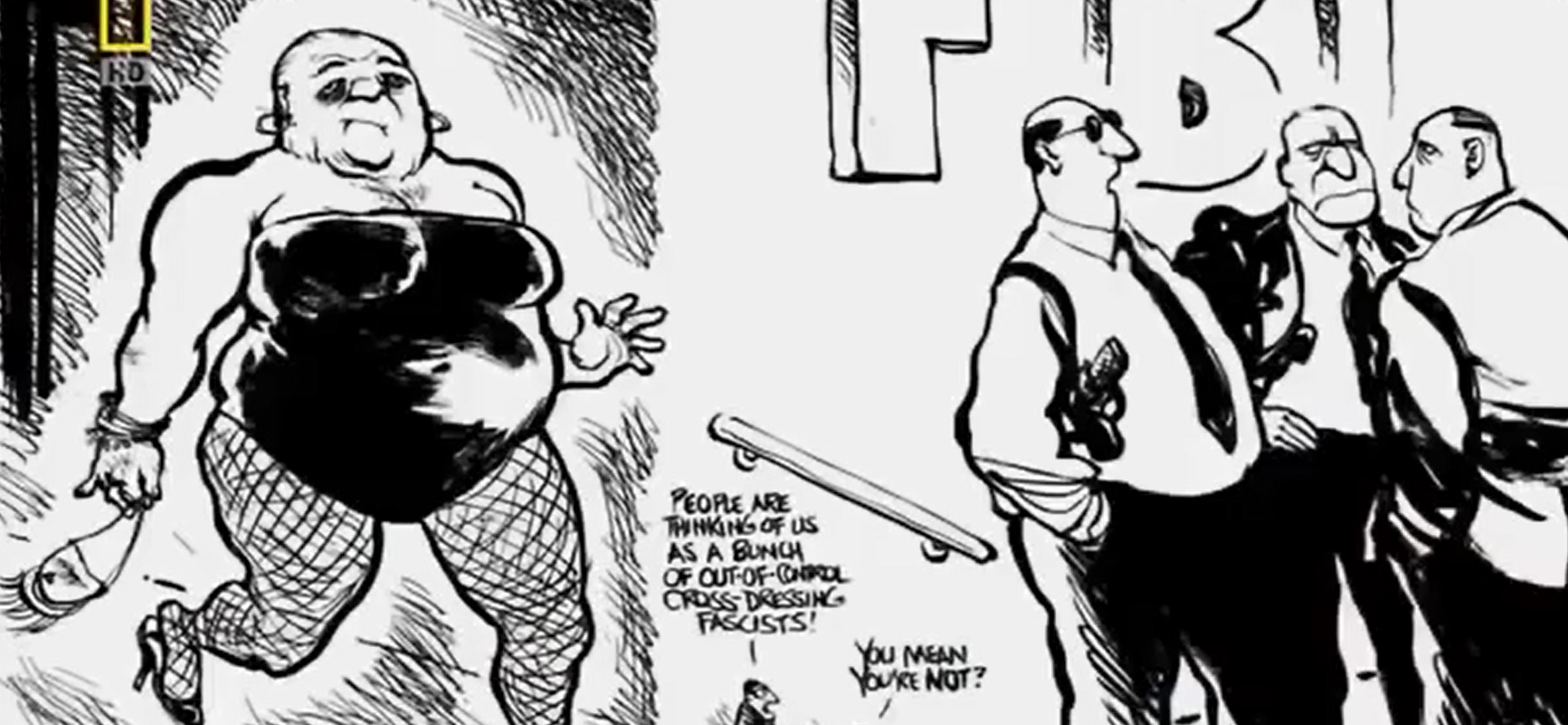
“I regret to say that we of the FBI are powerless to act in cases of oral-genital intimacy, unless it has in some way obstructed interstate commerce.”
J. Edgar Hoover
But behind the public persona his shocking private life from his gambling addiction to his preferences for women’s clothing nearly brought him down.
From the 1940s, rumors circulated that Hoover, who was still living with his mother in his early 40s, was homosexual.
Historians John Stuart Cox and Athan G. Theoharis speculated that Clyde Tolson, who became an assistant director to Hoover in his mid 40s, was a homosexual lover to Hoover.
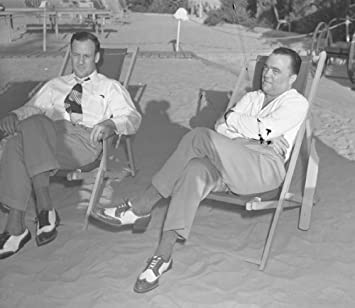
Hoover and Tolson frequently went to night clubs, and often vacationed together.
Ernest Miller Hemingway (July 21, 1899 – July 2, 1961) repeatedly called Hoover the head of the American Gestapo.
RELATED POST: On This Day — Hemingway Wins Nobel Prize (October 28 1954)
A. E. Hotchner — a good friend of Hemingway — recently came to the conclusion that the FBI may have been responsible for his suicide.
Did you know? On November 21 1964, a letter — and a tape recording allegedly of King’s sexual indiscretions — was delivered to Dr. Martin Luther King Jr. The author suggested that King should commit suicide or else… Although the letter was anonymously written, King suspected the FBI had sent the package He was not wrong.
Former F.B.I. director James Comey kept a copy of the King wiretap request on his desk as a reminder of the bureau’s capacity to do wrong. It is hard to miss the irony.
“Ernest Hemingway’s relationship with the Federal Bureau of Investigation would charitably be described as ‘strained’. Hemingway would tell anybody who’d listen that he thought the Bureau were a bunch of Nazi mediocrities … and the FBI in turn dismissed Hemingway as a drunken phony. As his file shows, however, all of that changed when Hemingway finally did something the Bureau agreed with: he died.”
Muckrock — ‘Ernest Hemingway’s death significantly improved his relationship with the FBI’
Secrets of J Edgar Hoover
REFERENCES
J. Edgar Hoover — History
=
On This Day — Edgar Hoover Becomes FBI Deputy Director (August 22 1921)
On This Day — J. Edgar Hoover Becomes FBI Deputy Director (August 22 1921) [UPDATE : “The FBI Loses the Public”]
On This Day — J. Edgar Hoover Becomes FBI Deputy Director (August 22 1921) [UPDATE : FBI Confidence Remains Low Amid Controversial Leadership]

