
“Do You Really Need More Information? The US Intelligence Community invests heavily in improved intelligence collection systems while managers of analysis lament the comparatively small sums devoted to enhancing analytical resources, improving analytical methods, or gaining better understanding of the cognitive processes involved in making analytical judgments.”
Psychology of Intelligence Analysis
Richards J. Heuer
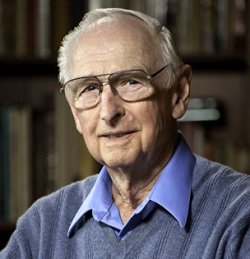
August 21, 2026 — Former CIA veteran Richards “Dick” J. Heuer died on August 21st 2018 at Carmel Valley Manor. Dr. Heuer was recruited into the Central Intelligence Agency during its early years. Throughout his career he worked in numerous areas of the intelligence field. He was the recipient of multiple honors from the Central Intelligence agency, the International Association of Law Enforcement Intelligence Analysts and the International Association for Intelligence Education. Follow us on Twitter:@INTEL_TODAY
RELATED POST: One Year Ago — CIA Dr Richards J. Heuer: “Information Collection vs Analytical Methods”
RELATED POST: National Security Advisor McMaster: “More information does not equate to better understanding”
RELATED POST: Enhanced Interrogation: CIA Psychologist’s Book Defends The Program
RELATED POST: CIA Director Mike Pompeo defends ‘State Secrets Privilege’ in high profile torture case
“In a world deluged by irrelevant information, clarity is power.”
Yuval Noah Harari
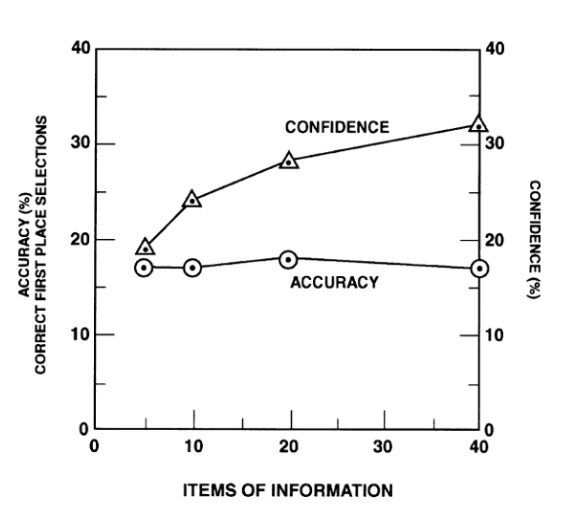
UPDATE (August 21, 2026) — Heuer’s famous “horse-race” experiment demonstrated something remarkably counterintuitive: giving analysts more information increased their confidence, but did not necessarily improve their ability to predict the outcome.
Today, artificial intelligence can process vastly more information than any human analyst could hope to absorb. But that raises an old question in a new form: Does AI collected information produce better judgment — or simply greater confidence?
Interestingly, AI researchers are now experimenting explicitly with competing hypotheses, ambiguity-aware prediction, and systems capable of abstaining when the evidence is insufficient.
In other words, nearly five decades after Heuer’s experiment, we may be rediscovering the importance of one of his central lessons: the challenge is not merely to gather more information, but to reason properly about competing explanations.
Heuer might have recognized the problem immediately. More data is not necessarily more knowledge. And more confidence is certainly not the same thing as being right.
END of UPDATE
“Dick influenced analysis at the CIA more than any other single person.”
Former CIA Director
Michael Morell
Dick Heuer was born in Philadelphia to Richards J Heuer, Sr. and Marion Dapp Heuer. After a brief stint as a draftee in the army, Dick attended Williams College, graduating with a Bachelor of Arts in Philosophy.
Heuer went on to study at the University of California, Berkeley where he met his future wife Feesie Farnsworth, the start of 61 years of devoted married life. Later in life he went on to complete his graduate studies obtaining a Masters in International Relations from the University of Southern California.
He was most known for his work on analysis of competing hypotheses and his groundbreaking book, Psychology of Intelligence Analysis, continues to be a staple in intelligence programs nearly 20 years after its publication by CIA; one of the most frequently cited examples of applied psychology in the literature.
Throughout his career, he has worked in collection operations, counterintelligence, intelligence analysis and personnel security. In 2010 he co-authored a book with Randolph (Randy) H. Pherson titled Structured Analytic Techniques for Intelligence Analysis.
Richards Heuer is well-known for his analysis of the extremely controversial and disruptive case of Soviet KGB defector Yuri Nosenko, who was first judged to be part of a “master plot” for penetration of CIA but was later officially accepted as a legitimate defector. [Wikipedia]
“Analysis of competing hypotheses (ACH) is an analytic process that identifies a complete set of alternative hypotheses, systematically evaluates data that is consistent and inconsistent with each hypothesis, and rejects hypotheses that contain too much inconsistent data.”
Analysis of competing hypotheses
Heuer’s work on analysis of competing hypotheses [ACH] provides a methodology for overcoming intelligence biases.
ACH is an eight step process to enhance analysis:
1 — Identify all possible hypotheses
2 — Make a list of significant evidence and arguments
3 — Prepare a matrix to analyze the “diagnosticity” of evidence
4 — Drawn tentative conclusions
5 — Refine the matrix
6 — Compare your personal conclusions about the relative likelihood of each hypothesis with the inconsistency scores
7 — Report your conclusions
8 — Identify indicators
Heuer originally developed ACH to be included as the core element in an inter-agency deception analysis course during the Reagan administration in 1984 concentrated on Soviet deception regarding arms deals.
COVID-19 & The Analysis of competing hypotheses
In late May 2021, President Biden tasked the US Intelligence Community to determine (90-day review period) whether the COVID-19 virus emerged from human contact with an infected animal (Hypothesis 1) or from a laboratory accident (Hypothesis 2).
The President stated that a non classified version of the IC report would be released on, or about, August 26, 2021.
Right from the start (June 3 2021), I predicted correctly that the US Intelligence Community would not reach a definitive conclusion on the origin the COVID-90 pandemics.
How did I know? Well, you can not expect meaningful answers when you ask ambiguous questions.
The two hypotheses stated above do not constitute a complete set of alternative hypotheses.
For instance, a natural origin does not rule out a laboratory accident. Moreover, a Wuhan scientist collecting bat samples for research purposes could very well be the patient zero.
And then, there is worse, much worse. Based on the result on his experiments, Heuer came up with a clear recommendation to intelligence analysts.
What new information would have the biggest impact on your current analysis. What new information would be needed to change your mind?
Allow me to repeat a small point. On May 15 2021, I reminded you that:
“The intermediary host species of SAR-COV-S1 was identified within four months of the epidemic’s outbreak, and the host of MERS within nine months. But 16 months after the outbreak of this pandemic, neither the original bat population, nor the intermediate species to which SARS-COV-2 might have jumped, has been identified.”
And to this day, almost six years later, the statement remains true. No confirmed intermediate host has been identified for SARS-CoV-2. If such a link exists, it has not yet been found. The precise source of introduction into humans remains unknown.
Amazingly, the CIA–ODNI report did not even acknowledge this gap. One can only imagine Dr. Heuer turning over in his grave. It is as if the Agency has learned nothing from his lifetime of work on structured analysis and the dangers of ignoring disconfirming evidence.
That said, the intelligence community has shifted. Today, several U.S. agencies — including the CIA, FBI, and Department of Energy — now assess that a lab-origin is more likely than natural spillover, albeit with low to moderate confidence. Still, no definitive conclusion has been reached, and critical questions remain unanswered.
“The scientist seeks to disprove a hypothesis, not to confirm it. A hypothesis is accepted only when it cannot be rejected.”
Richards J. Heuer Jr.
Psychology of Intelligence Analysis
REFERENCES
Psychology of Intelligence Analysis — Richards J. Heuer Jr — Chapter V – Do You Really Need More Information?
Richards “Dick” J. Heuer, Jr. — The Monterey Herald (Sept. 2, 2018)
=
Remembering CIA Psychologist Richards “Dick” J. Heuer, Jr. (July 15 1927 – August 21 2018) [The Legacy of ACH and the Eight-Step Process]

