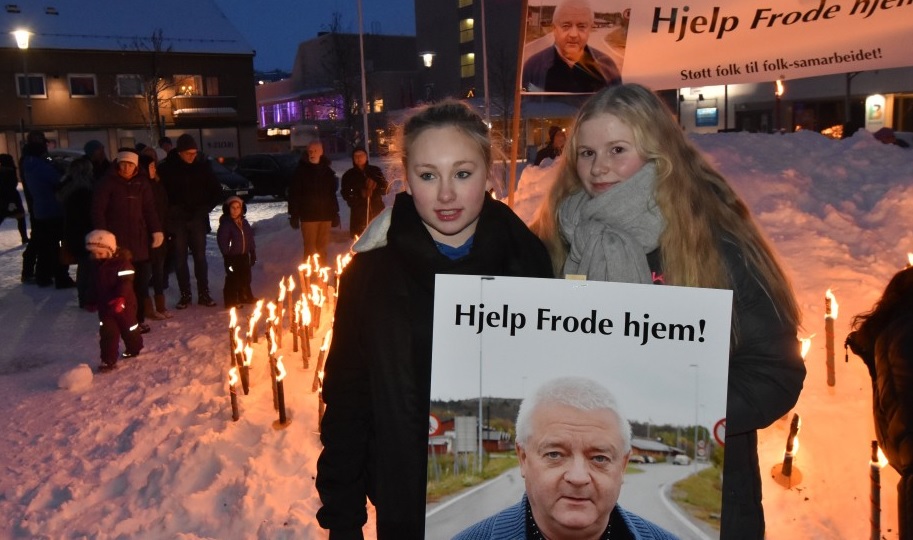
“Frode must come home, and Norwegian authorities must do what they can to get him out. It is not a good signal when such a positive and distinguished bridge-builder like Frode is arrested, it is not a good sign.”
Kirkenes town Mayor Rune Rafaelsen
“Once again we see the effects of big politics hitting us here locally, and we demand an end to that!”
Father Torbjørn Brox Webber
“I would not characterise the case as a global attack on bilateral relations. We have a relationship with Norway which develops in different areas. These kind of things happen, and it is uncomfortable, [but] our national legislation provides for adequate measures.”
Spokeswoman Maria Zakharova (December 28 2017)
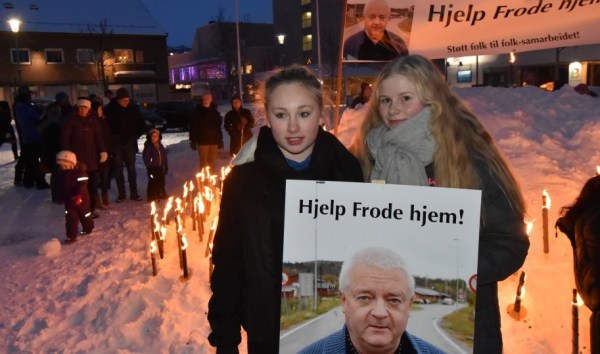
Frode Berg, a 62 retired border inspector, was arrested by Russian security service agents in downtown Moscow on December 5th 2017. He is jailed in isolation at the high-security Lefortovo prison.
Berg was allegedly caught receiving classified material about the Russian Navy that he is accused of planning to hand over to Norwegian and U.S. intelligence agencies. Berg claims that he was duped into working for Norway’s national intelligence agency.
On October 30 2018, the Moscow City Court has upheld the expanded arrest until December 5 2018. On Friday (November 30 2018), the court decided to prolong his arrest for another two months. On January 30 2019, the Moscow City Court has extended Berg’s detention until April 5 2019.
On April 16 2019, Frode Berg has been sentenced to 14 years, as requested by the prosecutor. Follow us on Twitter: @Intel_Today Continue reading →