“It is now very clear that there were two separate agreements, one the official agreement with Carter in Algeria, the other, a secret agreement with another party, which, it is now apparent, was Reagan. They made a deal with Reagan that the hostages should not be released until after Reagan became president. So, then in return, Reagan would give them arms. We have published documents which show that US arms were shipped, via Israel, in March, about 2 months after Reagan became president.”
Former Iranian President Abolhassan Banisadr
“Mr Karrubi agreed in the second Madrid meeting to cooperate with the Reagan campaign about the timing of any hostage release. In return, he was promised that the Reagan Administration, once in office, would return Iran’s frozen assets and help them acquire badly needed military equipment. (…)During my research, I spoke to several of the former hostages. I was deeply moved by the response of one in particular. After listening to the evidence, he said simply: ‘I don’t want to believe it. It’s too painful to think about it.’ Painful it is. But the rest of us are obliged to think about it. Hard.”
Gary Sick — Retired Naval Captain who served on Ford’s, Carter’s, and Reagan’s National Security Council
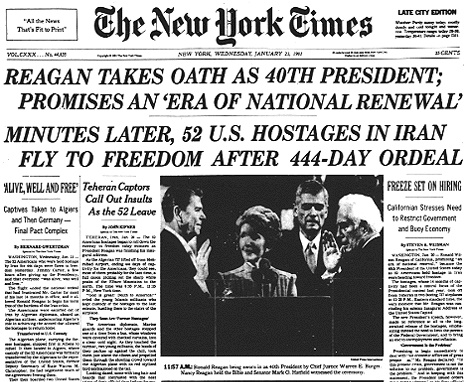
On January 20 1981, 20 minutes after Reagan concluded his inaugural address, the Islamic Republic of Iran announced the release of 52 Americans being held hostage in Iran since November 4 1979. Allegations that the Reagan administration negotiated a delay in the release of the hostages until after the 1980 presidential election have been numerous. Gary Sick, principal White House aide for Iran and the Persian Gulf on the Carter administration’s National Security Council, claimed in his book “October Surprise: America’s Hostages in Iran and the Election of Ronald Reagan” that CIA Director William Casey and possibly Vice President George H. W. Bush went to Paris to negotiate such a delay. Follow us on Twitter: @INTEL_TODAY Continue reading →




 Intel Today