
“This is the book America needs right now. . . . This work by Michael Rey and Oriana Zill de Granados is not just a thriller. It is a tour de force of journalism, among the highest examples of what our profession is and can be. (…) The Havana Syndrome should be read by every American who respects or doubts the power and veracity of ‘shoe leather’ journalism.”
Scott Pelley
60 Minutes correspondent
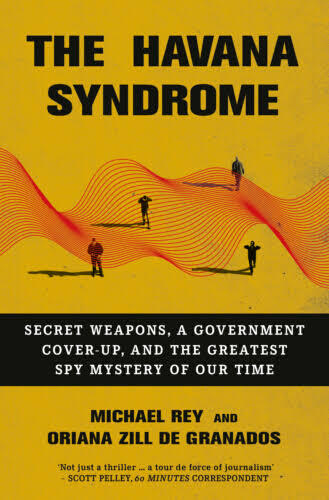
September 14, 2026 — A new book by investigative journalist Michael Rey and Oriana Zill de Granados examines the mysterious illness first reported among U.S. diplomats in Havana and the 10-year investigation into what became known as “Havana Syndrome.” This is an outstanding book and a must-read for all students of intelligence. Drawing on extensive reporting and newly uncovered material, the authors explore the competing explanations, the intelligence implications, and the extraordinary mystery surrounding these cases. Follow us on Twitter: @INTEL_TODAY
RELATED POST : Five Years Ago — And thus a new syndrome was born… [Havana Syndrome – October 3 2017]
RELATED POST : Havana Syndrome: On the Path to Nobel Recognition?
RELATED POST: Havana Syndrome — What Are the Frequencies Used by US Intel for Microwave Spying? [2019]
“The truth is out there . . .
but start with this book.”
Chris Carter,
The X-Files
At the beginning of the book, the authors methodically examine the very first reports of this saga and credit Intel Today with coining the term “Havana Syndrome.”
The relevant passage reads:
The Associated Press was the first outlet to advance the story. “After months of investigation, U.S. officials concluded that the diplomats had been exposed to an advanced device that operated outside the range of audible sound and had been deployed either inside or outside their residences.
It was not immediately clear if the device was a weapon used in a deliberate attack or had some other purpose.” Unnamed U.S. officials speculated that it was some kind of new listening device that had gone awry or had been powered up too high and was hurting its targets.
The next day, headline writers across the country struggled with putting a name to the news that had emerged from Nauert’s briefing. They used phrases like “mysterious ailment” and “a string of bizarre incidents.” The Coeur d’Alene Press in Idaho topped its news summary with “Hearing Loss of U.S. Diplomats in Cuba Blamed on Covert Gizmo.” And the headline writers at the tabloid New York Post came through with the zinger of the day: “The Cuban Whistle Crisis.”
It took another two months for someone to come up with a name that would stick. It appeared in a blog post on a website called IntelToday that has a loyal readership in the U.S. and European intelligence communities. It was coined by Dr. Ludwig De Braeckeleer, a Belgian nuclear physicist who is credited for his work on the discovery of neutrino oscillations.
In his spare time, Dr. De Braeckeleer is an intelligence and espionage enthusiast with a keen interest in the 1988 bombing of Pan Am flight 103 over Lockerbie, Scotland. His blog focuses on “an appreciation for how science and secrecy have influenced pivotal moments in global affairs.” He sensed that this thing in Havana might be one of those moments.
On October 3, 2017, after devouring all the coverage generated in the weeks after Heather Nauert’s press briefing, he headlined his daily blog post using a new phrase for the first time, “US Spies & the Havana Syndrome.”
The official UK Penguin page gives the release date as October 15, 2026. The book can already be pre-ordered. Following its publication, Intel Today will review specific parts of this important work.
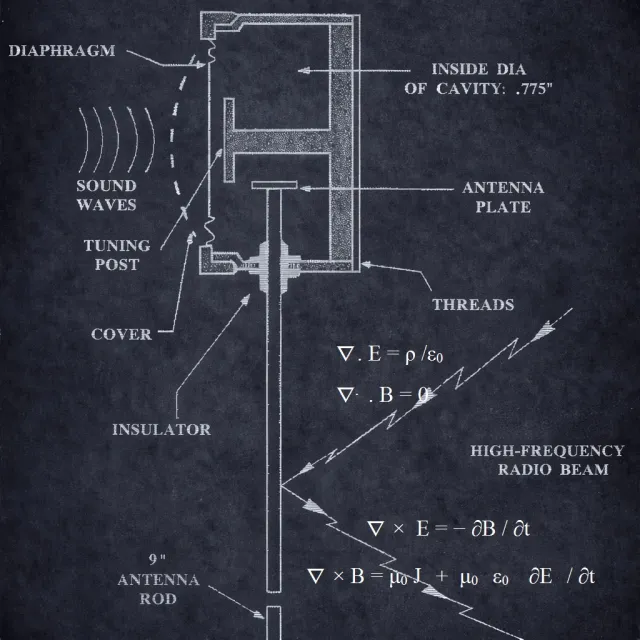
“This became known as the microwave auditory effect and it could help to explain a spate of mysterious illnesses reported by American diplomats around the globe, most famously in Havana, Cuba.”
Nobel Prize Official Website
April 2026
REFERENCES
The Havana Syndrome
Michael Rey and Oriana Zill de Granados
https://www.thehavanasyndromebook.com/
=
New Book — The Havana Syndrome: Secret Weapons, a Government Cover-Up, and the Greatest Spy Mystery of Our Time
“If the facts are confirmed and if the effects are indeed caused by a physical device, I find the microwave explanation far more likely than a sonic attack.”
US Spies & the Havana Syndrome
INTEL TODAY
October 3, 2017


Pingback: Intel Today — TEN YEARS. ONE MILLION VIEWERS. — AND STILL ASKING WHY | Intel Today