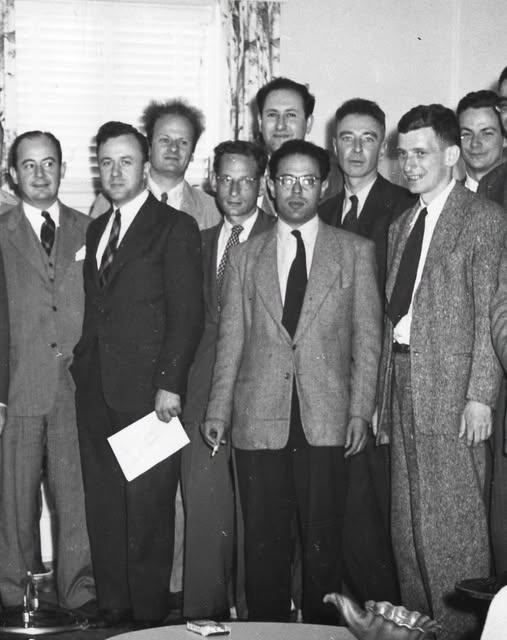
“We knew the world would not be the same. A few people laughed, a few people cried. Most people were silent. I remembered the line from the Hindu scripture, the Bhagavad Gita. ‘Now I am become Death, the destroyer of worlds.’ I suppose we all thought that, one way or another.”
J. Robert Oppenheimer
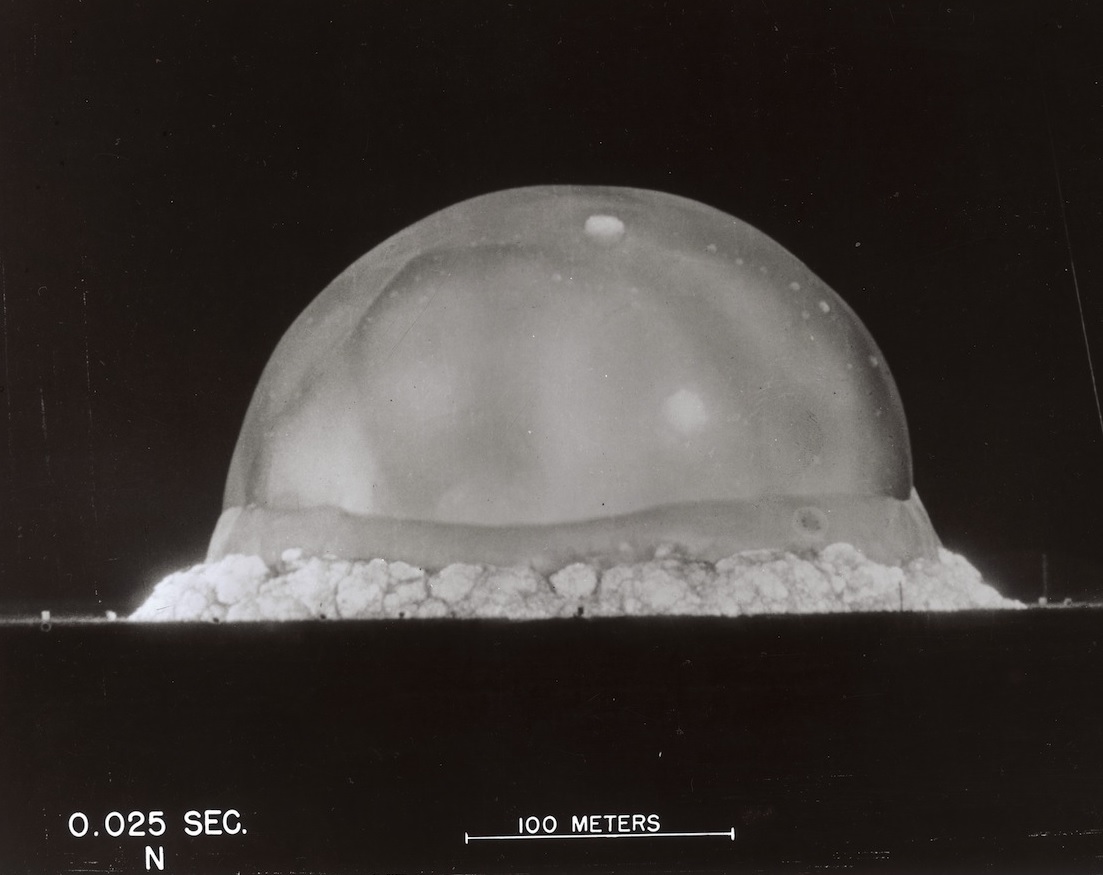
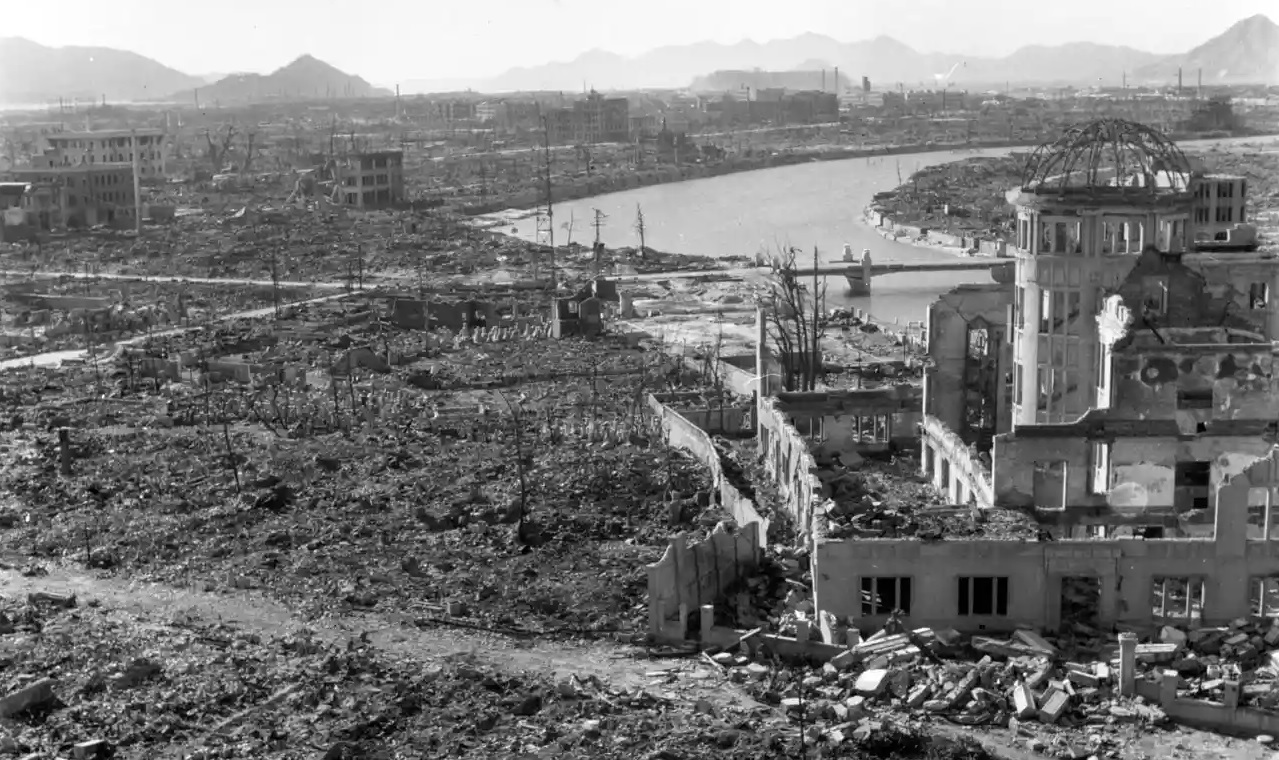
July 15, 2026 — On July 16, 1945, the US detonated the world’s first nuclear weapon, a plutonium-based device, near Alamogordo, New Mexico. Trinity, as the test was known, was successful. Three weeks later, the United States used an atomic bomb against the Japanese city of Hiroshima, marking the first wartime use of a nuclear weapon. The world would never be the same. Follow us on Twitter: @INTEL_TODAY
RELATED POST: Remembering Hiroshima (August 6 1945)
RELATED POST: On This Day — Stanislav Petrov Saves the World from Nuclear War (Sept. 26 1983)
RELATED POST: Significant Uncertainties in the Yield Estimate of North Korea H Bomb
RELATED POST: The VELA Incident: Declassified Files Shed Light on the Nuclear Test Controversy
RELATED POST: One Year Ago — Top US Nuclear Commander: “I wouldn’t carry out illegal nuclear strike order from Trump”
RELATED POST: The Los Alamos Primer — The Bethe – Feynman Equation [Nukes & Secrecy]
RELATED POST: On This Day — Atomic Spies Rosenbergs Executed (June 19 1953)
Trinity was the code name for the first detonation of a nuclear weapon. Conducted by the United States Army at 5:29 a.m. on July 16, 1945, it was the first major test of the Manhattan Project.
The test took place in the Jornada del Muerto desert, about 35 miles (56 km) southeast of Socorro, New Mexico, at what was then the USAAF Alamogordo Bombing and Gunnery Range.
The device tested was an implosion-design plutonium weapon, informally known as “The Gadget.” Its design was essentially the same as that of the Fat Man bomb later detonated over Nagasaki, Japan, on August 9, 1945.
The Trinity detonation released energy equivalent to approximately 22 kilotons of TNT — about 92 terajoules (TJ) — marking the beginning of the nuclear age.

The Magical World of Dimensional Analysis
Initially, the radius R of the blast should depend only on three fundamental quantities: the energy E released by the explosion, the time t after detonation, and the density ρ of the surrounding air.
Using dimensional analysis, the only combination of these quantities that produces the dimensions of length is the Sedov–Taylor relation:

where:
R = radius of the expanding blast wave
E = energy released by the explosion
t = time after detonation
ρ = density of the surrounding medium
C = dimensionless constant determined by the physics of the explosion. For a strong spherical blast wave, C is approximately equal to 1.
Taking 

Since 1 kiloton of TNT is equivalent to 4.184 
This is a remarkable result, considering the simplicity of the estimate: using only the explosion energy 

There is a lesson to be learned. Sometimes the biggest secrets lie on the cover of a magazine.
The Trinity Test
Elsie McMillan remembers asking her husband Edwin what would happen at the Trinity Test.
REFERENCES
Trinity (nuclear test) — Wikipedia
=
On This Day — US Detonates First Nuclear Weapon (Trinity Test, July 16, 1945) | The Magical World of Dimensional Analysis
“Humans destroyed Hiroshima, but humans also rebuilt it. This is a holy site … somewhere people can come to compare the horrors of the past with the city Hiroshima has become today.”
Kazumi Matsui
Hiroshima’s mayor