
“The President’s rapid disenchantment with the project was not lost on Richard Bissell. Fearing for the U-2 program’s survival, he met with the Land committee in early August 1956 to urge them to help make the U-2 less vulnerable to radar pulses. His goal was to reduce the aircraft’s radar cross section so that it would be less susceptible to detection. Edward Purcell had some ideas on this and suggested that he supervise a new project in the Boston area to explore them.”
The Central Intelligence Agency and Overhead Reconnaissance
The U-2 and OXCART Programs (1954-1974)
History Staff Central Intelligence Agency, 1992
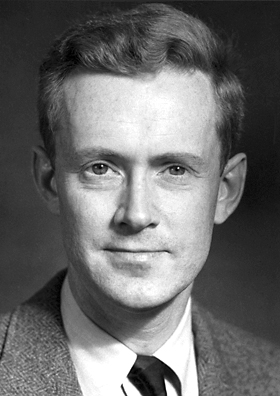
March 7, 2026 — In 1960 the CIA found itself in trouble with the Lockheed U-2. A physicist—Edward Mills Purcell—helped find a solution. Half a century later the Agency confronted a different puzzle: Havana Syndrome. This time, no physicist came to the rescue. Why not? When the Sputnik 1 satellite was launched by the Soviet Union in 1957, it triggered panic in Washington. The U.S. Congress responded with the National Defense Education Act (1958), funding science education, expanding fellowships, and strengthening physics and engineering programs. Today the Sputnik effect is long gone, and the golden age of physics feels like a distant dream. Follow us on Twitter: @INTEL_TODAY
RELATED POST : On This Day — U2 Pilot Francis Gary Powers Exchanged in Spy Swap for KGB Rudolf Ivanovich Abel (February 10 1962)
RELATED POST: Havana Syndrome — What Are the Frequencies Used by US Intel for Microwave Spying? [2019]
RELATED POST: Havana Syndrome — Reductio ad Absurdum : When Nobel Dreams Meet Darwinian Reality.
Purcell won a Nobel prize in 1954 for his work in nuclear resonance. He served on a number of advisory bodies, including the USAF Scientific Advisory Committee and Edwin Land’s Technological Capabilities Panel study group. He died on March 7, 1997, in Cambridge, Massachusetts, aged 84.
Though Purcell made incredible strides in physics and played a role in shaping modern technology in areas like NMR, his specific contributions to stealth technology for the U-2 are not widely cited.
The development of stealth technology for the U-2 is more often attributed to later figures and engineers working at agencies like the CIA and military research institutions such as the Skunk Works at Lockheed Martin. It was Purcell’s ideas for reducing the radar cross section of the U-2 that led to the OXCART program.
Purcell proposed solutions for both Radar Cross-Section (RCS) Reduction and the Use of Radar-Absorbing Materials.
“At the direction of the Land committee, Richard Bissell set in motion a project known as HTNAMABLE to establish a proprietary firm called the Scientific Engineering Institute (SEI) in Cambridge. Former Air Force Col. Richard S. Leghorn headed the SEl operation for the Agency when it began on 26 November 1956. SEI was staffed by several MIT scholars who conducted studies and experiments into radar-absorbing materials and techniques proposed by Purcell. The effort, known as Project RAINBOW, got under way by the end of the year.” [The U-2 and OXCART Programs]
Early efforts in stealth technology focused on reducing the radar signature of aircraft. This was done through design strategies that minimized the aircraft’s radar cross-section. Such techniques include using angular surfaces to deflect radar waves and the application of radar-absorbing materials. While these technologies were more developed in the 1970s and 1980s, the groundwork for radar signature reduction was laid in the U-2 era.
“Edward Purcell and Franklin Rodgers had come up with a theory that a continuously curving airframe would be difficult to track with a radar pulse because it would present few corner reflectors or sharp angles from which pulses could bounce in the direction of the radar.” [The U-2 and OXCART Programs]
Although more commonly associated with later stealth aircraft like the F-117 and B-2, early research into radar-absorbing materials was pivotal. These materials help absorb or scatter radar waves, making the aircraft less detectable. The use of advanced composites and other coatings started influencing U-2 aircraft modifications.
“Lockheed’s major innovation in reducing radar return was a cesium additive in the fuel, which decreased the radar cross section of the afterburner plume. This improvement had been proposed by Edward Purcell of the Land committee.” [The U-2 and OXCART Programs]
Purcell’s work serves as a reminder that scientific exploration and innovation are integral to national defense. The close collaboration between scientists, engineers, and military personnel ensures that the tools of national security remain at the cutting edge, reinforcing the critical role that science plays in safeguarding the interests of nations around the world.
“It is the role of intelligence to identify and characterize threats to the nation and to sift what is likely true from what is probably false. But the public has gotten very little useful or meaningful information from our intelligence agencies. They could do better.”
Steven Aftergood
Federation of American Scientists
The Berkeley Physics Course
The Berkeley Physics Course is a series of college-level physics textbooks written mostly by UC Berkeley professors.
A Sputnik-era project funded by a National Science Foundation grant, the course arose from discussions between Philip Morrison (then at Cornell University) and Charles Kittel (Berkeley) in 1961, and was published by McGraw-Hill starting in 1965.
The Berkeley course was contemporary with The Feynman Lectures on Physics , a college course at a similar mathematical level.
These physics courses were developed in the atmosphere of urgency about science education created in the West by Sputnik.
Eugene D. Commins was not only the author of Volume 1 of the Berkeley Physics Course, covering mechanics, but also the supervising architect of the entire series.
He coordinated the project, guided the other authors, and ensured that all five volumes reflected a modern, concept-driven approach to physics education. Commins’ vision emphasized conceptual clarity, mathematical rigor, and the link between theory and experiment—principles that made the Berkeley series a model for post-Sputnik American physics curricula and helped shape a generation of scientists.
I met Commins in August 1989, barely a few weeks after completing my PhD, while visiting Seattle for a summer school. I remember our discussion in Ernest Henley’s office as if it were yesterday… Giants truly walked the earth back then.
REFERENCES
Edward Mills Purcell — Wikipedia
=
Remembering Edward Mills Purcell (August 30, 1912 – March 7, 1997) [From the U-2 Incident to the Mystery of Havana Syndrome]
“One is reminded of Montaigne’s acerbic comment: ‘Men under stress are fools, and fool themselves.’ ”
Michael Crichton
The Andromeda Strain
 Intel Today