
“Cretton [Real name : Swiss Inspector Hans Knaus] expressed his concerns (…) The first was that the CIA had planted the chip [PT/35(b)] in the wreckage found at Lockerbie. [Detective Superintendant (SIO) Stuart] Henderson and I told him this thought had also crossed our minds. Neither of us believed the CIA or any government official would do such a thing, but we had discussed the possibility.”
FBI Agent Richard Marquise
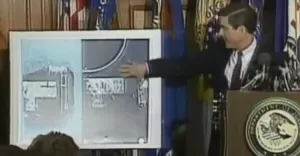
March 31, 2026 — I believe that the key piece of evidence — PT/35(b) — was indeed fabricated and planted in order to incriminate Libya and justify severe sanctions against the country. More than three decades later, no one has been charged in connection with any such wrongdoing. Yet, in a striking number of cases, individuals associated with the investigation and prosecution later faced serious professional consequences. To some, this looks very much like karma. Follow us on Twitter: @INTEL_TODAY
RELATED POST : Lockerbie — BBC and Netflix release first-look pictures of new documentary [UPDATE : From Irony to Reality]
RELATED POST : FBI Forensic Science : Incompetence or Malice? [UPDATE : US DOJ/OIG Report on the FBI Forensic Laboratory]
RELATED POST : Lockerbie DNA Evidence Turns Upcoming Trial into a Soap Opera [UPDATE — Lockerbie Hearing: No Sound (Evidence Lost)]
Dr. Thomas Hayes and Allen Feraday, both employed at the Royal Armament Research and Development Establishment (RARDE), played crucial roles in the forensic case. Hayes is widely credited with “finding” the fragment later labeled PT/35(b), while Feraday asserted that it was “similar in all respects” to an MST-13 timer — an FALSE assertion that became central to linking Libya, and Abdelbaset al-Megrahi, to the tragedy.
However, both men’s forensic credibility had been challenged in other cases. Hayes had previously provided evidence in the case of the Maguire Seven, where convictions were later overturned. A subsequent judicial review was highly critical of the scientific basis of that prosecution, stating that it was so flawed that the convictions could not stand. Hayes later resigned from his position as director, ultimately leaving forensic science altogether to become a chiropractor.
Feraday’s record was similarly controversial. In multiple cases where his forensic testimony contributed to convictions, those verdicts were later overturned on appeal. In one instance, a senior judge remarked that he should no longer present himself as an expert in electronics.
The evidentiary chain did not stop with PT/35(b). It also required linking the fragment to MST-13 timers allegedly supplied exclusively to Libya by the Swiss firm MEBO. It later emerged that U.S. authorities possessed such a timer, reportedly obtained under unclear circumstances in Togo in 1986—raising further questions about the provenance and narrative surrounding key evidence.
James Casey, the central player in this part of the story, was later found by a federal jury to have unlawfully retaliated against FBI whistleblower Jane Turner. He was subsequently dismissed from the FBI following additional controversy.
Thomas Thurman, the FBI examiner credited with identifying PT/35(b), also became the subject of serious scrutiny. Thurman later admitted during legal proceedings that he had been instructed by his superiors to lie to a Grand Jury in order to cover up the CIA’s involvement.
Allegations emerged that he had overstated his expertise and overstepped his authority in several high-profile cases. Following an investigation by the United States Department of Justice Office of the Inspector General into the FBI Laboratory, Thurman was removed from his position.
Even outside the investigative sphere, consequences appeared. Stanley Chesley, a prominent attorney who secured major settlements for Lockerbie victims’ families, was later disbarred for grave misconduct.
What goes around, it seems, really does come around.
“What shocked me most was that I thought that all that had been gone through on Guildford and Birmingham, the one thing that had been achieved was that nobody would be convicted again on bad science. But yet in the Lockerbie case, it isn’t just the same bad science, it is the same bad scientists.”
Gareth Peirce
Solicitor for the Guildford Four
and the Birmingham Six
 Intel Today