
“If this government ever became a tyranny… the technological capacity that the intelligence community has given the government could enable it to impose total tyranny, and there would be no way to fight back.”
Senator Frank Church
1975
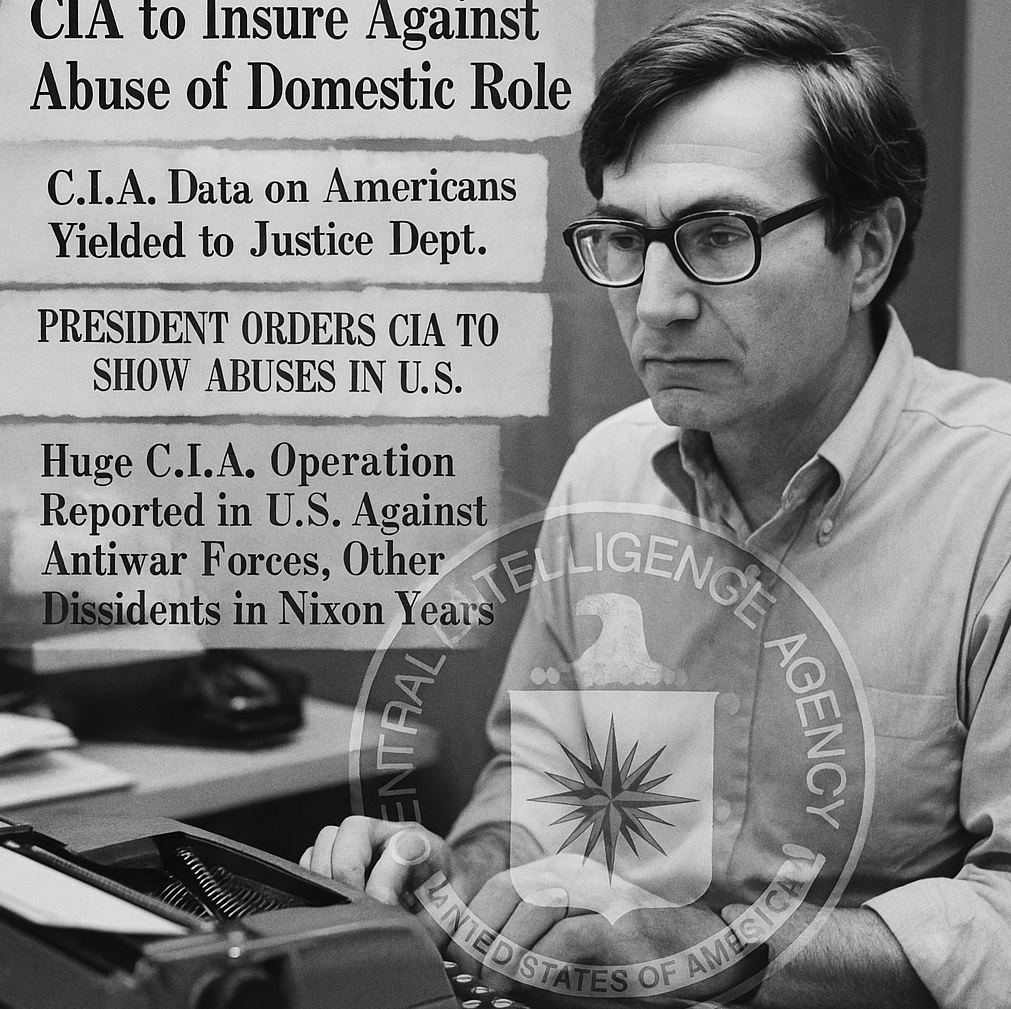
July 8, 2025 — The year 1975 marked a watershed moment in the history of American governance. For the first time, the covert operations and unchecked authority of the U.S. intelligence community were subjected to sweeping public and legislative scrutiny. Through the landmark investigations of the Church Committee, the Pike Committee, and the Rockefeller Commission, the veil was lifted on decades of clandestine activity—revealing a pattern of surveillance, manipulation, and covert intervention both at home and abroad. Often referred to as “The Year of Intelligence,” this extraordinary period triggered a fundamental re-examination of how democratic societies should balance national security with civil liberties. It laid the foundation for modern intelligence oversight—and raised questions that remain urgent to this day. Follow us on Twitter: @Intel_Today
RELATED POST : CIA Memorial Wall — STAR 2 : Jerome P. Ginley (East China Sea – January 11, 1951)
RELATED POST : Lockerbie DNA Evidence Turns Upcoming Trial into a Soap Opera
In the early 1970s, most Americans — like many Europeans today — gave little thought to the activities of intelligence agencies. To the general public, “spies” were fictional characters like James Bond, not bureaucrats operating in secret on behalf of the state. In 1970, the CIA was not the subject of a single editorial in any major U.S. newspaper. By contrast, in 1975 alone, the agency was the focus of over 200 editorials across the country’s most influential publications.
What changed? A chain of explosive revelations exposed the darker undercurrents of U.S. intelligence policy — first abroad, then at home — and ignited a political firestorm that could no longer be ignored. These disclosures set in motion the most sweeping congressional investigations in American history, forcing a long-overdue reckoning with the shadowy power of the intelligence state.
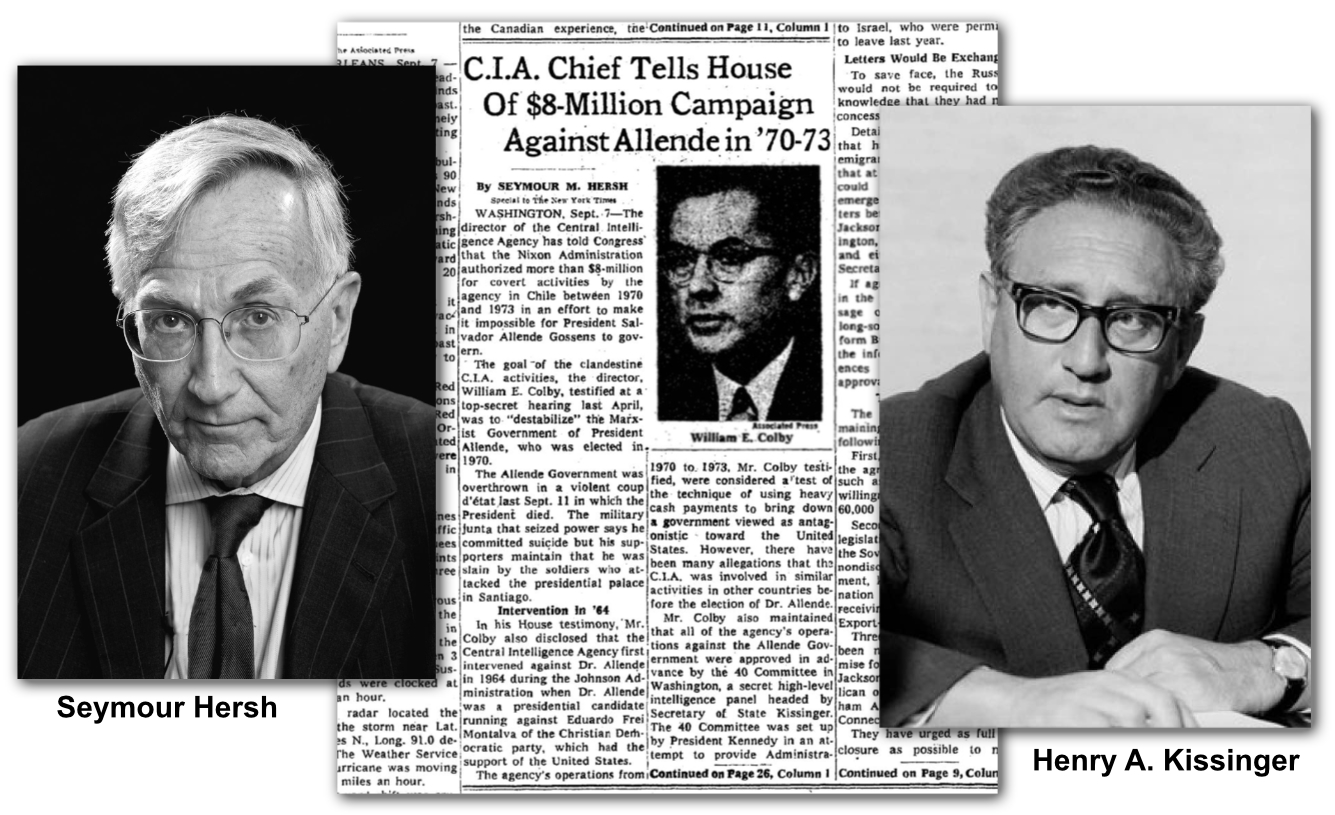
On September 8, 1974, The New York Times and The Washington Post reported that the Central Intelligence Agency had played a direct role in undermining the democratically elected government of Salvador Allende in Chile—an operation that culminated in the violent 1973 coup and the installation of General Augusto Pinochet. This revelation stood in direct contradiction to the CIA’s publicly stated mandate to act solely in the interest of U.S. national security. It reignited long-simmering concerns about the agency’s clandestine role in manipulating foreign governments throughout the Cold War.
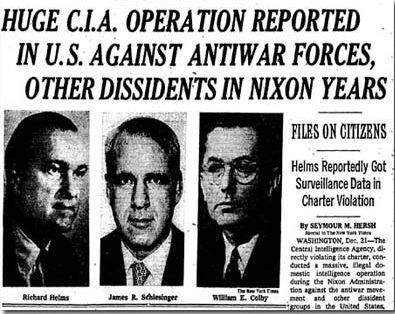
The second—and arguably more politically explosive—revelation came just months later, on December 22, 1974. Investigative journalist Seymour Hersh published a front-page exposé in The New York Times revealing what he called a “massive, illegal domestic intelligence operation” by the CIA. According to Hersh, the agency had spied on thousands of American citizens—primarily antiwar activists, civil rights leaders, and other dissidents—in blatant violation of its charter, which prohibited domestic surveillance. The story sent shockwaves through Washington and ignited a national reckoning over the unchecked power of the intelligence establishment.
In an attempt to contain the political fallout, President Gerald Ford established the Rockefeller Commission in January 1975. Chaired by Vice President Nelson Rockefeller, the commission was tasked with investigating the CIA’s domestic activities. But its narrow scope and close ties to the executive branch only fueled public skepticism. Far from restoring confidence, the commission’s limited mandate heightened demands for a broader, truly independent inquiry.
What began as a series of explosive journalistic investigations quickly snowballed into one of the most sweeping governmental inquiries in American history. By early 1975, both houses of Congress were preparing for a comprehensive, unprecedented examination of the entire U.S. intelligence apparatus.
From Oversight to Exposure
In January 1975, both the U.S. Senate and the House of Representatives launched powerful select committees to conduct sweeping investigations into the practices and abuses of the intelligence community. These efforts were part of a broader reckoning with decades of covert operations and unchecked executive authority.
The Senate Select Committee to Study Governmental Operations with Respect to Intelligence Activities, chaired by Senator Frank Church (D-ID), became known simply as the Church Committee.
The House Select Committee on Intelligence, chaired by Representative Otis Pike (D-NY), was commonly referred to as the Pike Committee.
Although their mandates overlapped, the two committees adopted different investigative styles and faced unique political challenges. Yet together, they exposed an extraordinary array of abuses—spanning illegal surveillance, covert foreign interventions, assassination plots, and deep institutional secrecy. Their work pulled back the curtain on how U.S. intelligence had been used not just to protect national security, but to manipulate political outcomes at home and abroad — often with little or no oversight.
The Church Committee
Operating with a strong bipartisan mandate and an unusually public profile, the Church Committee uncovered a wide range of illegal, unethical, and unauthorized activities carried out by U.S. intelligence agencies. Its findings stunned the nation and revealed systemic abuses of power carried out in secret and with little oversight:
Assassination Plots: The CIA had been involved in multiple covert attempts to assassinate foreign leaders—including Fidel Castro, Patrice Lumumba, and Rafael Trujillo—often with tacit or ambiguous approval from the White House.
COINTELPRO: The FBI’s notorious counterintelligence program targeted civil rights leaders, antiwar activists, journalists, and political dissenters through infiltration, disinformation, harassment, and blackmail. Dr. Martin Luther King Jr. was one of its primary targets.
Surveillance of Americans: The NSA engaged in warrantless surveillance of U.S. citizens through secret programs such as SHAMROCK and MINARET, bypassing judicial and congressional oversight entirely.
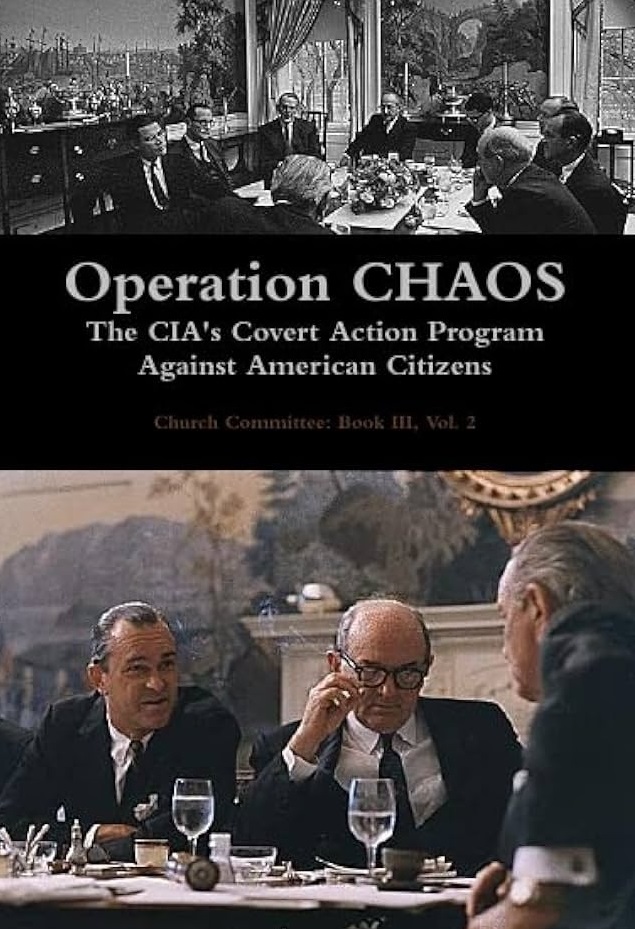
Operation CHAOS: Originally intended to track foreign influence on domestic unrest, the CIA’s Operation CHAOS had grown into a sprawling domestic surveillance program, monitoring thousands of Americans and political organizations.
Weak Oversight Structures: The Committee found that intelligence agencies frequently operated outside the law, misled Congress, and functioned with minimal legal accountability.
The Committee’s 14-volume final report, released between 1975 and 1976, remains a landmark in the history of intelligence oversight. Its findings raised fundamental questions about the role of secrecy in a constitutional democracy. Senator Church’s most chilling warning—that the unchecked power of the intelligence community could one day enable “total tyranny”—continues to echo with relevance today.
The Pike Committee
Taking a more adversarial and forensic approach, the Pike Committee—led by Representative Otis Pike (D-NY)—focused on the structural dysfunction of the intelligence community, particularly its relationship with Congress and the executive branch. Its investigation emphasized systemic failures in transparency, oversight, and policy integrity. Key findings included:
Lack of Accountability: Intelligence agencies routinely withheld critical information from Congress and the public, often operating through ambiguous legal authorizations and undisclosed internal directives.
Misuse of Funds: The Committee revealed substantial financial opacity, including the use of secret “black budgets” shielded from congressional auditors—undermining fiscal accountability.
Policy Failures: Intelligence reporting was frequently distorted, ignored, or tailored to support pre-determined policy agendas, with glaring examples in the cases of Vietnam, Chile, and Angola.
Operational Ineffectiveness: The Committee questioned the actual strategic value of many intelligence operations, raising doubts about whether they truly enhanced national security.
The Pike Committee’s work encountered staunch resistance from the Ford Administration, the CIA, and even elements within the House of Representatives. When the Committee sought to publish its final report, the White House intervened, refusing to declassify large portions of the findings.
In an extraordinary episode, the report was ultimately leaked and published by The Village Voice in early 1976—an act that highlighted the deep tensions between democratic transparency and national security secrecy.
Legacy of the Investigations
The Church and Pike Committees marked a turning point in American governance, laying the foundation for modern intelligence oversight. Their investigations revealed the dangers of unchecked power and catalyzed critical institutional reforms, including:
The Foreign Intelligence Surveillance Act (FISA) of 1978: This landmark law created the FISA Court to provide judicial oversight of domestic surveillance, particularly when targeting U.S. citizens—introducing, for the first time, a legal framework for secret surveillance.
Permanent Congressional Oversight Committees: In the wake of the investigations, both the House and Senate established standing intelligence committees tasked with continuous review of intelligence activities, budgets, and covert operations—breaking with decades of near-total executive secrecy.
A Cultural Reckoning: Perhaps the most enduring shift was philosophical. The idea that national security must be subject to democratic controls gained legitimacy. The presumption of absolute secrecy gave way—at least temporarily—to the principle that intelligence agencies serve the public, not the other way around.
Yet, as subsequent decades would show, oversight mechanisms are only as strong as the political will behind them. The legacy of 1975 remains not just a set of reforms, but a standing warning.
Why It Still Matters Today
The Church and Pike Committees revealed that unchecked intelligence power threatens not only individual freedoms but also the very foundations of democratic governance.
Decades later, their revelations still resonate because they expose a core tension between security and liberty—a tension that remains at the heart of democratic societies. Their legacy endures for several key reasons:
Enduring Oversight Challenges: Despite reforms, intelligence agencies continue to operate with significant secrecy, raising persistent questions about the effectiveness and independence of congressional and judicial oversight.
Surveillance and Privacy: The committees’ exposure of warrantless domestic spying foreshadowed today’s debates around the Patriot Act, NSA mass surveillance (such as the Snowden revelations), and the delicate balance between national security and individual privacy.
Accountability and Transparency: Their work established the vital principle that government secrecy cannot be absolute and that intelligence operations must be subject to rigorous checks to prevent abuses of power.
Democratic Resilience: By exposing how unchecked intelligence agencies targeted political dissenters and eroded civil liberties, these investigations serve as a crucial warning: democratic institutions remain vulnerable to authoritarian pressures.
Legal and Institutional Frameworks: Laws like the Foreign Intelligence Surveillance Act (FISA) and permanent congressional intelligence committees—both direct outcomes of these investigations—continue to form the backbone of intelligence oversight today.
Ultimately, the Church and Pike Committees remind us that vigilance, transparency, and accountability are essential—not just for safeguarding national security, but for protecting the democratic values intelligence agencies are meant to uphold.
Lessons Learned — and Forgotten?
Although the Church and Pike Committees exposed serious intelligence abuses and inspired key reforms, many of their warnings remain highly relevant — yet often overlooked — in today’s controversies:
Snowden Revelations (2013): Edward Snowden exposed NSA mass surveillance programs that collected vast amounts of domestic and international data without sufficient oversight. This echoed earlier concerns raised by the Church Committee about warrantless spying on Americans.
CIA and Ukraine Coup (2014): Reports and leaked documents suggest the CIA played a covert role supporting the 2014 Maidan uprising in Ukraine. This reflects ongoing U.S. intelligence involvement in foreign regime changes, reminiscent of Cold War covert actions revealed by the Committees.
Russiagate and FISA Abuse (2016–2019): The FBI and CIA’s reliance on questionable intelligence to secure FISA warrants during the Russiagate investigation revealed persistent risks of politicization and oversight failures.
Persistent Oversight Gaps: Despite reforms like FISA and permanent intelligence committees, the intelligence community still operates with significant secrecy. Oversight mechanisms continue to struggle to keep pace with evolving technologies and shifting political pressures.
The tension between national security and civil liberties—at the heart of the 1970s investigations—remains unresolved. This ongoing challenge underscores the delicate balance between conducting effective intelligence operations and protecting constitutional rights.
While the Church and Pike Committees set foundational standards for intelligence oversight, many of their lessons have been forgotten or sidelined. Their legacy demands renewed vigilance to safeguard democratic governance from the dangers of unchecked intelligence power.
“Frank Olson was a man profoundly distressed about what he was learning, and he was dangerous. Olson’s death was no accident or suicide. It was a (US) government operation to silence a man who knew too much.”
Seymour Hersh
How Much Longer? Secrecy vs. Democratic Accountability
Five decades after the watershed investigations of 1975, we must ask: how far have we truly come? Why do key questions about intelligence agency accountability remain unanswered decades later?
Why do the circumstances surrounding the death of CIA officer Jerome Patrick Ginley (January 11, 1951) remain classified nearly 75 years later?
What were the exact reasons behind the assassination of U.S. Army scientist Frank Olson (November 28, 1953)?
Is it really too soon to ask why the CIA still refuses to reveal the name of an officer who died in 1965, or to disclose the truth about the bombing of the Kashmir Princess (April 11, 1965)?
Why are the CIA and NSA still withholding key documents related to the assassination of UN Secretary-General Dag Hammarskjöld (September 18, 1961)?
And after all these years, when will the CIA be held accountable for its suspected role in the Pan Am Flight 103 (Lockerbie, December 21, 1988) and UTA Flight 772 (September 19, 1989) tragedies?
These unanswered questions remind us that the legacy of secrecy and unaccountability endures.
As citizens, journalists, and policymakers, the challenge remains: how do we ensure intelligence oversight is not only robust in theory but effective in practice?
References
Seymour M. Hersh, “C.I.A. Aid to Chilean Junta Detailed: Efforts to Oust Allende Laid to Nixon,” The New York Times, September 8, 1974.
Seymour M. Hersh, “Huge C.I.A. Operation Reported in U.S. Against Antiwar Forces, Other Dissidents in Nixon Years,” The New York Times, December 22, 1974.
=
1975: The Year of Intelligence [What the Church and Pike Investigations Revealed — and Why Their Warnings Still Matter]
 Intel Today