
“If you’ve got his DNA [in the suitcase] … it would knock down the building blocks of his potential defence.”
Dick Marquise
Former lead FBI agent on the Lockerbie investigation
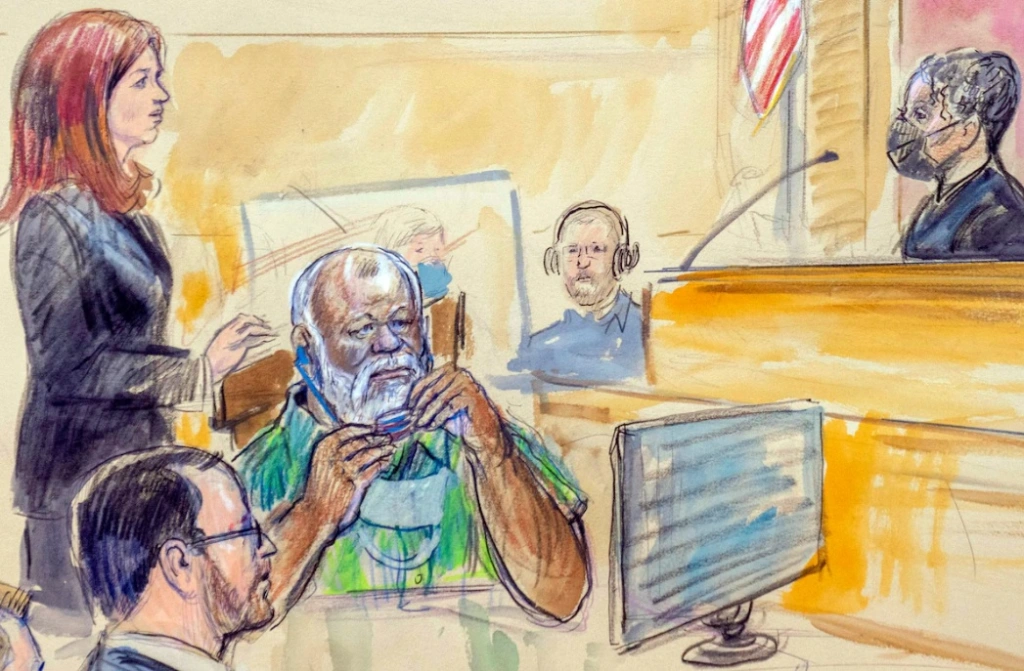
June 29, 2025 — Nearly four decades after the tragedy of Pan Am Flight 103 over Lockerbie, Scotland, investigators may have uncovered the most significant piece of forensic evidence to date. For the first time, DNA has been extracted from the suitcase believed to have contained the bomb that killed 270 people in 1988. This breakthrough could prove pivotal in the long-delayed U.S. trial of Abu Agila Masud, the Libyan intelligence operative accused of building the device. As the case re-enters the courtroom, science—not speculation—may finally deliver the answers that have eluded justice for almost 40 years. Follow us on Twitter: @Intel_Today
RELATED POST : Lockerbie — BBC and Netflix release first-look pictures of new documentary [UPDATE : From Irony to Reality]
RELATED POST : FBI Forensic Science : Incompetence or Malice? [UPDATE : US DOJ/OIG Report on the FBI Forensic Laboratory]
For the first time, modern forensic techniques have successfully extracted DNA fragments from items found in the suitcase — including the infamous umbrella and an item relating to the lining — that allegedly concealed the bomb aboard Pan Am Flight 103 in 1988.
Dr. Nighean Stevenson of the Scottish Police Authority’s forensic laboratory applied specialized lighting and sample collection methods to gather DNA that—until now—had been preserved but unanalyzable.
According to US court papers: “The DNA profiles obtained from these items were of varying quality and were generally commensurate with the expectations of these items.”
This extracted DNA will next be compared to Abu Agila Masud’s reference sample, obtained after his detention.
“Analysis of a DNA reference sample relating to the accused nominal [Masud] has yet to be carried out. When a DNA profile relating to this individual has been generated, it will thereafter be compared to any suitable DNA profiles which have already been obtained.”
Potential legal consequences
In the past, the trials and various appeals were based largely on circumstantial evidence such as the infamous timer fragment PT/35(b), a dubious identification, and travel patterns.
This DNA breakthrough represents the most consequential forensic advance since the bombing.
A positive DNA match could decisively strengthen the US prosecution’s case and obliterate Masud’s defense, which maintains that his alleged confession — given in Libya in 2012 — was coerced.
Such a match might also raise new questions about Abdelbaset al‑Megrahi and Lamin Fhimah, previously named by Masud in his confession.
Even if the DNA does not match, this outcome would carry profound significance as it could lend weight to alternative theories and leave unresolved questions in the decades-old investigation.
RELATED POST : One Year Ago — Lockerbie : Why I ruled out the bomb theory [Technical Analysis of the Debris Lines]
The trial is scheduled to begin in April 2026. All eyes are now fixed on this critical forensic evidence, which could finally tip the scales of justice in a case that has haunted families and nations for nearly 40 years.
Or not…
The Old “Look at the Door” Trick
Henri Landru was a French serial killer tried in 1921. During World War I, he posed as a lonely widower seeking companionship through classified ads. In reality, he lured wealthy widows to his villa in Gambais, murdered them, and allegedly disposed of their bodies in his oven.
Ten women—and the teenage son of one of them—disappeared after visiting Landru. There were no bodies, no direct eyewitnesses, and no confession. The entire case was built on circumstantial evidence, which left—just barely—room for reasonable doubt.
Landru’s defense lawyer, Vincent de Moro Giafferri, was a master of courtroom theatrics. During his closing argument, he focused on the absence of physical proof. He knew that if he could shake the jury’s certainty, he might save his client from the guillotine.
At a dramatic moment, Moro Giafferri played a psychological card. As he neared the end of his plea, he said something like:
“One of the women Landru is accused of killing—what if she is still alive? What if she walked through that door right now?”
He gestured toward the courtroom entrance. And naturally, every juror turned to look. Then came the punchline:
“Ladies and gentlemen, you all looked. That means you’re not sure. And in our justice system, if there is doubt, it must benefit the accused.”
It was a brilliant moment—simple, theatrical, unforgettable. A masterclass in planting uncertainty.
Back to Lockerbie
Now, 37 years after the downing of Pan Am Flight 103, U.S. authorities claim they have extracted DNA from the suitcase believed to have held the bomb.
The sample is being tested to determine whether it matches that of Abu Agila Mohammad Masud, the Libyan man accused of constructing the device.
Let’s be clear: the FBI and the US DoJ know the DNA won’t match. The purpose of this operation isn’t to prove Masud’s guilt—it’s to perform certainty. It’s the modern version of the “look at the door” trick.
Only this time, it’s not the defense gesturing at the door. It’s the prosecution—and they already know no one’s coming through. Because this trial isn’t for a jury. It’s for public consumption.
By conducting a highly publicized DNA analysis—decades after the fact, with compromised evidence—they aren’t seeking truth.
They’re selling belief. They’re telling the world: “We’re still working the case. We believe in the evidence. We believe in the guilt.”
But they don’t. And we know it.
They lie.
We know that they lie.
They know that we know that they lie.
But they lie anyway.
And the spectacle continues.
Stay tuned!
Forensic Science: “We’ve got a match!”
Source
DNA extracted from Lockerbie bomb suitcase, 37 years after atrocity — The Times (2025, June 29).
=
Lockerbie DNA Evidence: The Last Trick
“What I can tell you is the Crown’s case has been based on circumstantial evidence. There is no eyewitness, no smoking gun.”
Professor Clare Connelly
University of Glasgow, Scotland
Director of the Lockerbie Trial Briefing Unit
January 30, 2001
 Intel Today