“One cannot help but wonder whether the outrage over his release might be tempered if those angry individuals were to seriously examine the suspicious eyewitness testimony (…) My examination has led me to seriously wonder: Is the Lockerbie bomber still out here?”
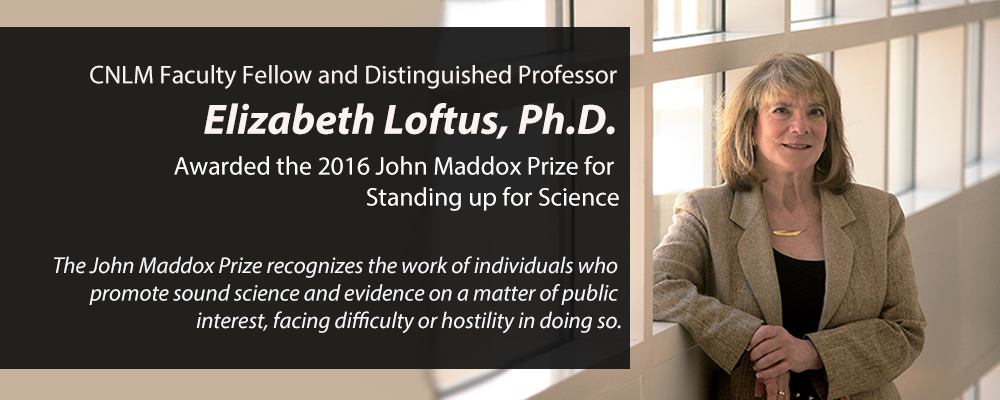
Professor Elizabeth F. Loftus
June 20, 2018 — Elizabeth F. Loftus is a Distinguished Professor of Social Ecology and Professor of Law and Cognitive Science at University of California, Irvine. Her research has demonstrated that people can be led to develop rich false memories for events that never happened.
These false memories look very much like true ones. Indeed, they can be confidently told, detailed, and expressed with emotion. Professor Loftus has kindly agreed to answer a few questions regarding her understanding of Tony Gauci’s testimony and statements. Follow us on Twitter: @Intel_Today
“We see in others the shadow we refuse to see in ourselves.”
C.G. Jung
UPDATE (June 27, 2025) — This profound insight, rooted in Jung’s theory of the Shadow, reveals how we often reject the unconscious parts of our own personality — only to project them onto others. For better, and often for worse, we perceive what we wish to see.
Such is the domain of psychoanalysis. Yet, from the perspective of physiology, the matter is more straightforward. Vision is but a perception, constrained by the laws of physics and the nature of our eyes.
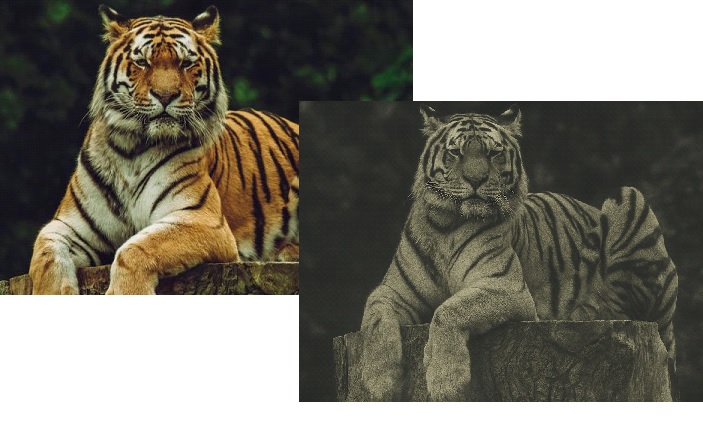
Consider the tiger’s striking orange coat. At first glance, it seems an ill-suited disguise—prisoners might attest it hardly avoids attention. Yet, it depends on the observer. Humans, endowed with trichromatic vision, perceive the vibrant reds of the tiger’s fur.
But the tiger’s principal prey—such as deer, wild boar, and gaur—possess dichromatic vision, seeing only blues and yellows or greens. To them, the tiger appears as a muted gray-green, almost vanishing amidst the jungle’s foliage.
What we see, then, is never reality itself, but a fragment of our own perception of the world beyond. Physicists ponder this paradox deeply, aware that the vast majority of the universe consists of elements still beyond our understanding.
In the end, whether shadows we hide or stripes that camouflage, reality whispers a simple truth: seeing is the art of convincing ourselves what we want to believe.
Did you know? When I was a young researcher at the University of Washington in Seattle, Professor Elizabeth F. Loftus was already recognized as one of the world’s leading experts on eyewitness testimony. She repeatedly demonstrated that eyewitness accounts must be treated with great caution. Over the years, she has lectured to the FBI, the Secret Service, the CIA, and numerous other law enforcement agencies.
Like me, she never accepted the official narrative about Lockerbie. In her book (2013), she wrote:
“Al-Megrahi was released from prison in 2009 and sent back to Libya on compassionate grounds due to advancing cancer. Public outrage was immediate. Yet, Al-Megrahi lived with his cancer for several years… One cannot help but wonder whether the outrage over his release might be tempered if those angry individuals were to seriously examine the suspicious eyewitness testimony that led to Al-Megrahi’s conviction in the first place. My examination has led me to seriously wonder: Is the Lockerbie bomber still out there?”
Well done…
To the surprise of many legal and psychological experts, Professor Elizabeth Loftus was never called to testify at the infamous Lockerbie trial. Why on earth not?
Given her internationally recognized expertise in the reliability — and fallibility — of eyewitness memory, her absence from the courtroom is as curious as it is concerning.
Loftus had spent decades demonstrating, with rigorous scientific backing, how memories can be distorted, implanted, or subtly shaped by suggestion.
She had advised the FBI, the CIA, and countless legal teams — yet in one of the most consequential trials hinging on fragile eyewitness evidence, her voice was notably absent.
Was it a legal oversight, a strategic omission, or something more political? We may never know. But in a case clouded by uncertainty, the lack of her testimony is itself a shadow worth examining.
Whatever the reason, let us hope that the legal team of Abu Agila Mohammad Masud will correct this omission — and that truth, at long last, will be allowed its full hearing.
END of UPDATE
“There is no reasonable basis in the trial court’s judgment for its conclusion that the purchase of the items [clothes that were found in the wreckage of the plane] from Mary’s House [in Malta] took place on 7 December 1988.”
The Scottish Criminal Cases Review Commission
June 20, 2018 — Given that Tony Gauci’s recovered memories — obtained in more than a dozen interviews spread over almost two years — may be genuine, false, or a combination of the two, it is legitimate to question how much of what he remembered is real and how much is illusion.
Intel Today — On Sept. 13, 1989, during a photofit session, Gauci stated that the buyer was about 50 years old. Born on April 1, 1952, Megrahi was 36 in late 1988. The next day, Gauci again told Detective Chief Inspector Bell that Megrahi was too young to be the man who bought the clothing.
“If the man in the photograph was older by about 20 years, he would look like the man who bought the clothing,” Gauci told DCI Bell.
In his first interview held on Sept. 1, 1989, Gauci told DCI Bell that the mysterious buyer was 6 feet tall or more. Megrahi is 5 feet 8, a significant discrepancy considering that it comes from a man who sells clothes for a living.
Tony Gauci — born on April 6 1944 — was 44 in late 1988. How likely is it that he confused a man much younger than himself for one much older?
Elizabeth F. Loftus –The age estimate was way off. It is suspicious but I do not know there is much research that would definitely show that one would be unlikely to say a person in mid 30s is over 50. Perhaps, one should check if the investigators “moved” his age estimate in the direction of the accused… even subtly.
Intel Today — The trial court’s judgment concluded that the purchase of the items [clothes that were found in the wreckage of the plane] from Mary’s House [in Malta] took place on 7 December 1988. The date was crucial as Megrahi is known to have been on the island that day.
Regarding the day of the purchase, Tony Gauci remembered that his brother Paul had gone home earlier to watch an evening football game (Rome vs. Dresden), that the man came just before closing time, around 7 p.m., and that there was some very light raining. (The man returned to the shop to buy an umbrella.) The game allows for only two dates: Nov. 23 or Dec. 7, 1988.
The game Rome-Dresden on Dec. 7 was played at 1 p.m., not in the evening. As a result, Paul Gauci thought that the purchases had occurred on Nov. 23, 1988. [There is no evidence Megrahi was in Malta on that day.]
Tony Gauci claimed the Christmas lights were not lit in the Maltese city of Sliema when Megrahi allegedly bought clothes from his shop.
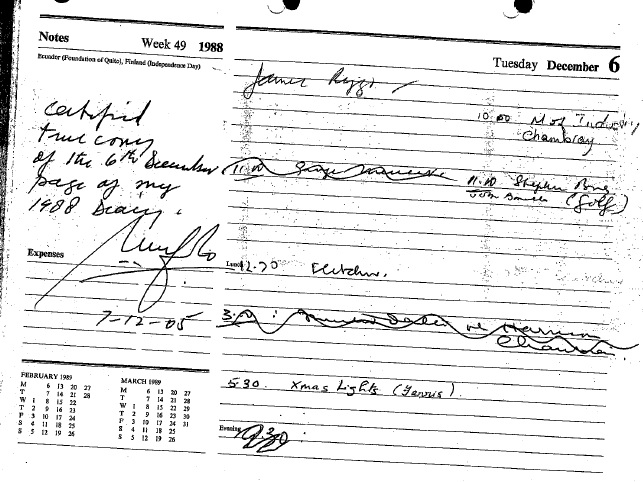
Michael Refalo, a former tourism minister in Malta and a former high commissioner in London, said he had lit them on December 6 1988 and an entry in his diary confirms that he did so at 5:30 pm.
However, at the trial, Tony Gauci stated the Christmas lights were lit when Megrahi allegedly bought clothes from his shop.
Elizabeth F. Loftus — One possibility is investigators decided that it had to be the later date… So, the Christmas lights were on… Somehow, this got suggested to Gauci.
Intel Today — The issue of the SLALOM shirts is of paramount importance as forensic experts claimed to have discovered in the collar of one of these shirts the fragment of an electronic timer which provided the key link between the bombing and Libya.
Statements by Gauci about the shirts
During his first interview with DCI Bell, Tony Gauci made a list of the items he had sold to the mysterious buyer. The list matched exactly the items that forensic experts at RARDE believed to have been in direct contact with the bomb, except for a black umbrella that they eventually “identify”. On that day – Sept. 1, 1989 — Gauci made no mention of the Slalom shirts.
On Jan. 30, 1990, Gauci was shown a SLALOM shirt and was asked if he had sold one to the mysterious buyer. “That man did not buy any shirt, I am sure,” Gauci stated to the investigators.
Then, on Sept. 10, 1990, Gauci suddenly recalled selling two Slalom shirts. It is not just odd, but contradicts a statement Gauci made on his first interview and repeated at the trial.
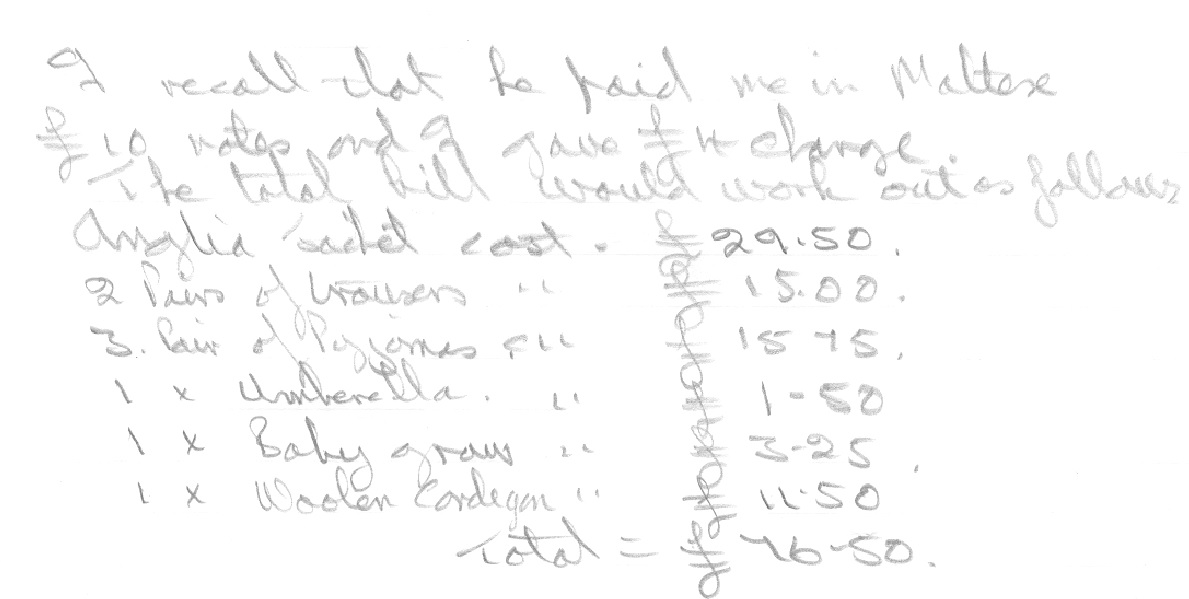
During his first interview, Gauci told DCI Bell that he remembered that the bill amounted to 76.5 Maltese pounds (LM). Gauci even clearly remembered that the man paid him with eight 10 LM bills, and that he returned 4 LM as he was not able to give a half pound in change.
Quite logically, DCI Bell then asked him to check the price of all the items he had just mentioned. And, lo and behold, the sum added to 76.5 LM… without any Slalom shirt. Had Gauci sold two shirts to the mysterious buyer, the bill would have been 84.5 LM.
What do you make of these statements? Notice how rich and detailed the first statement is! No shirts. And only much later does Gauci remember the shirts. (After being shown some by the investigators…)
Elizabeth F. Loftus — It was so long ago that I studied the materials…all i remember is basically what is in my article (that was based on my report to the lawyers)…. So I don’t recall this specific about the no shirt/shirt.
But my general view is that Tony Gauci changed his testimony to fit what the investigators wanted to show.
Intel Today — You may know that the FBI has been criticized by the Academy of Sciences for the use of ‘junk sciences’. Has the lesson been learned? Question 4 – Is your research known – and understood – by the FBI? Do you know if your work is being taught to FBI agents in order to ensure that the very best information is obtained from important witnesses? Have you been personally contacted to educate the FBI – and/or other institutions – on this very important subject?
Elizabeth F. Loftus — Their report was more about forensic science such as the analysis of fingerprints, bite marks, etc. There was another report titled “Identifying the Culprit” (2014) that was about eyewitness memory….and presented ideas for “best practices”…
Indeed, I have lectured to the FBI as well as the secret service, the CIA and other law enforcement agencies. Law enforcement is learning about the eyewitness research and, in some cases, they are changing their procedures.
Tony Gauci on al-Megrahi
A video program highlighting inconsistencies regarding key evidence against the convicted “Lockerbie bomber.”
Shopkeeper Tony Gauci describes a man unlike Megrahi in almost every physical way, and describes a day of purchase when it could not have been Megrahi.
The mystery of the judges’ acceptance of Gauci’s evidence as relevant to Megrahi is a mystery the video cannot and does not resolve.

 Intel Today