
“History will one day have its say. It will not be the history that will be taught in Brussels, Washington, Paris or the United Nations, but the history which will be taught in the countries that have won freedom from colonialism and its puppets.”
Patrice Lumumba
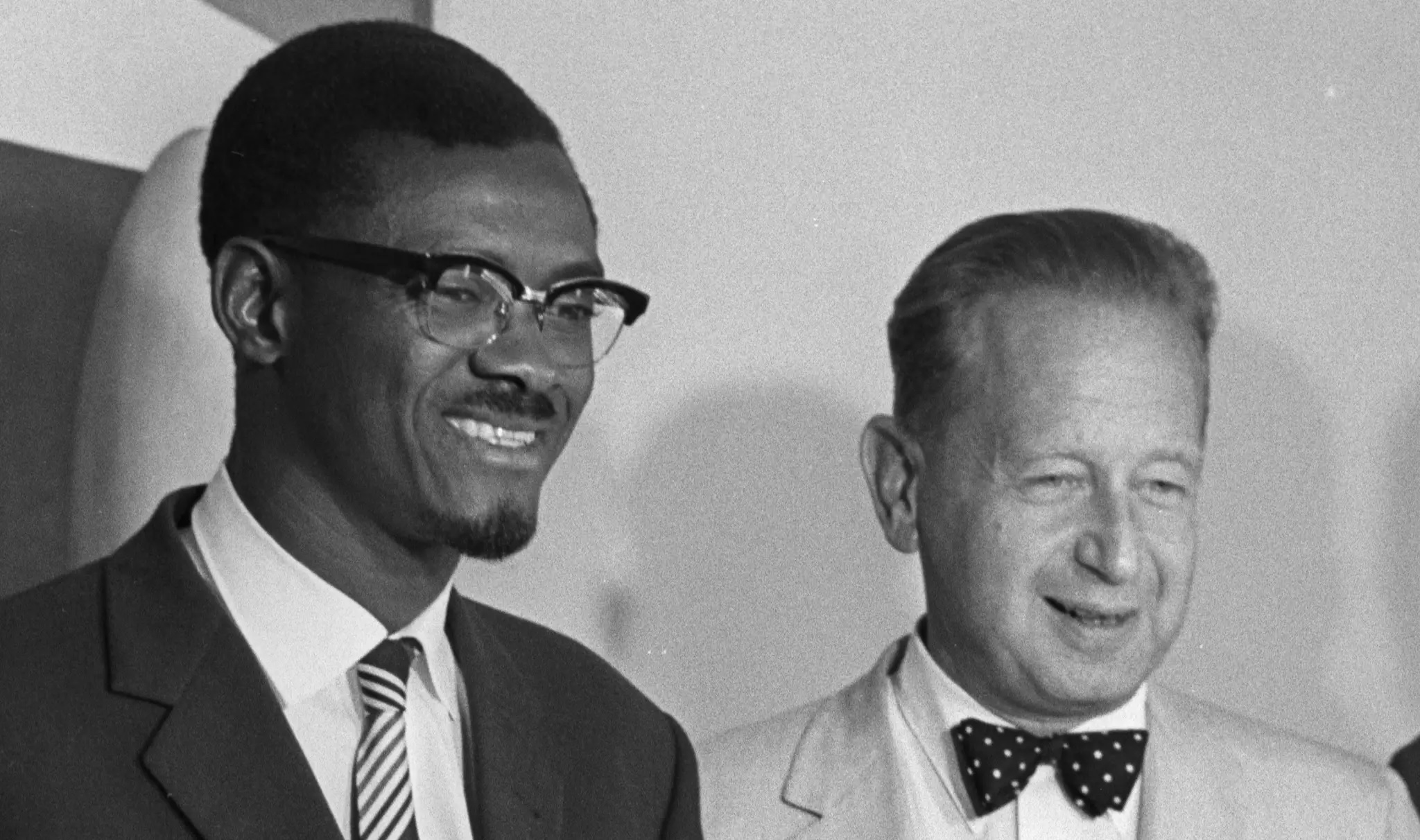
June 22, 2025 — On June 17, 2025, the Belgian federal prosecutor formally requested the prosecution of Étienne Davignon, former diplomat and powerful figure in Belgian and European circles, for his alleged role in the illegal arrest and transfer of Patrice Lumumba in 1961. At 92 years old, Davignon may soon face trial for events that took place at the very start of his career — and at the violent dawn of Congolese independence.
The charges are striking: “unlawful detention and transfer of a prisoner of war,” deprivation of a fair trial, and “humiliating and degrading treatment.” While the accusation stops short of naming Davignon as complicit in Lumumba’s execution on January 17, 1961, it breaks a long-held taboo — publicly implicating a senior Belgian official in the Cold War-era operation that led to the assassination of Congo’s first democratically elected Prime Minister.
But as the Lumumba case finally inches toward a courtroom, another unresolved death from the same geopolitical storm looms in the background: Dag Hammarskjöld, the UN Secretary-General who died under suspicious circumstances in a plane crash on September 18, 1961 near Ndola. Are we finally approaching a moment of accountability — not only for colonial crimes, but for the covert decisions that shaped post-independence Africa? Follow us on Twitter: @INTEL_TODAY
RELATED POST: Dag Hammarskjold — Belgian Intel Agency Fabricated Mercenary Alibi
RELATED POST: Biography — Jan Van Risseghem [Prime Suspect in Hammarskjold Cold case]
“Dag Hammarskjöld was on the point of getting something done when they killed him. Notice that I said ‘when they killed him.’ ”
Harry S. Truman
Former U.S. President (1961)
Background — Lumumba’s Assassination
Patrice Lumumba emerged as a towering figure of African independence, becoming Congo’s first democratically elected Prime Minister in June 1960. A charismatic leader, Lumumba fiercely championed Congolese sovereignty and sought to break free from Belgium’s colonial grip, advocating for full control over Congo’s vast natural resources.
However, his bold stance alarmed Western powers amid Cold War tensions. By September 1960, a Western-backed coalition, including Belgian authorities and the CIA, orchestrated his removal. Lumumba was arrested, secretly transferred to the breakaway Katanga province—supported by Belgium and multinational mining companies—and executed on January 17, 1961. His death became a symbol of the ruthless suppression of African self-determination and Cold War-era covert interventions.
Étienne Davignon, then a 28-year-old diplomatic trainee, is now alleged to have known about and facilitated aspects of Lumumba’s illegal detention and transfer—linking a young Belgian official’s early career to one of Africa’s darkest postcolonial crimes.
Davignon: Profile of a “Stagiaire” with Influence
In 1960, Étienne Davignon was a 28-year-old diplomatic trainee—a “stagiaire”—at the Belgian Ministry of Foreign Affairs. Though young and early in his career, Davignon operated within elite circles closely tied to Belgium’s political and economic establishment. His position placed him near sensitive decisions during Congo’s turbulent independence period.
Decades later, Davignon would rise to prominent roles: European Commissioner, influential businessman with Société Générale, and member of powerful transnational groups like the Trilateral Commission. This trajectory underscores the entanglement of colonial legacies with postcolonial elite networks, raising critical questions about how much knowledge and responsibility he bore during Lumumba’s detention.
The Belgian federal prosecutor’s decision to seek Davignon’s prosecution at this late stage challenges the long-standing veil of silence and hints at cracks in establishment protection.
“It appears plausible that an external attack or threat was a cause of the crash.”
UN Panel of Experts, 2019 Report on the Ndola Incident
The Shadow of Hammarskjöld
Just months after Patrice Lumumba’s assassination, the world was shaken by the mysterious death of Dag Hammarskjöld, the UN Secretary-General, who perished in a plane crash near Ndola on September 18, 1961. Hammarskjöld was en route to negotiate peace in the secessionist Katanga province—a key flashpoint in the Congo crisis.
For decades, Hammarskjöld’s death was officially ruled an accident, but persistent doubts and subsequent UN investigations suggest otherwise. In 2017 and again in 2019, UN panels released reports indicating the possibility of external interference or sabotage, possibly linked to covert Western intelligence or mercenary involvement.
Hammarskjöld’s commitment to Congo’s territorial integrity and independence directly challenged powerful interests tied to Belgian colonial networks, mining conglomerates, and Cold War geopolitical strategies. His death remains a haunting emblem of the risks faced by those who opposed the covert manipulation of postcolonial Africa.
Common Denominator: Cui Bono?
Who stood to gain from the deaths of both Patrice Lumumba and Dag Hammarskjöld? The question of cui bono — who benefits — is central to understanding these intertwined tragedies.
Belgian colonial elites sought to maintain control over Congo’s vast mineral wealth, particularly through the breakaway Katanga province, where multinational corporations like Union Minière held significant stakes. The secessionist regime in Katanga aligned with these interests, bolstered by covert support from Western intelligence agencies, including the CIA and British MI6.
The elimination of Lumumba removed a vocal opponent of neo-colonial exploitation, while Hammarskjöld’s death stymied UN efforts to resolve the crisis and restore Congolese sovereignty. These operations appear to be part of a coordinated Cold War strategy to suppress African independence movements and protect Western geopolitical and economic interests.
Understanding this common denominator is key to unraveling the shadowy networks that orchestrated both assassinations and to reassessing the legacy of Cold War-era interventions in Africa.
Why This Matters Now
The decision to prosecute Étienne Davignon, more than six decades after the events, signals a potential turning point in how Cold War-era crimes are confronted. It challenges the long-standing culture of impunity that shielded powerful actors involved in the violent suppression of African independence.
This legal move may open the floodgates for further investigations and disclosures, as archival records are declassified and international pressure mounts for accountability. Beyond Belgium, intelligence agencies and governments in the US, UK, and other Western powers face renewed scrutiny over their roles in covert operations tied to decolonization conflicts.
At a time when global conversations about colonial legacies and reparations are intensifying, revisiting these historic injustices is crucial—not only to deliver justice for victims like Lumumba but to reshape the narratives that have long obscured the truth about postcolonial Africa.
Conclusion — Justice Delayed, But Not Denied?
The indictment of Étienne Davignon is more than a legal proceeding; it is a symbolic rupture in decades of silence surrounding colonial-era crimes. While justice comes late—over 60 years after Lumumba’s assassination—it carries the profound message that accountability cannot be postponed indefinitely.
This case invites us to reconsider not only individual culpability but the systemic forces that enabled such tragedies—forces that spanned governments, corporations, and intelligence networks. The shadows cast by Lumumba and Hammarskjöld’s deaths still shape global politics and memory today.
As courts prepare to examine the role of a young Belgian diplomat turned powerful establishment figure, the world watches: will the walls of secrecy finally crumble, allowing truth and justice to emerge from the shadows of history?
The Truth is Out There: Secrets Behind the Ndola Crash
A decade ago, researchers from the Hammarskjöld Commission submitted Freedom of Information Act requests seeking communications records related to the plane crash near Ndola on September 18, 1961. They asked for any documentation of radio exchanges or reports of one plane firing on another that night.
The NSA responded that it had found three responsive documents—but two remain sealed, protected by an Obama administration executive order citing “exceptionally grave damage to national security” if released. The third document originated from another, unnamed government agency.
FOIA exemptions for “Sources and Methods” aim to protect intelligence-gathering techniques, but the technology and methods from 1961 are now obsolete. So, what are they really hiding?
A likely explanation is that the U.S. government wanted to keep secret its surveillance of allies using Crypto AG, a Swiss company covertly owned by U.S. and German intelligence, which sold compromised encryption devices worldwide. This espionage operation—long suspected—is now public knowledge, raising the stakes on what else remains concealed about the Hammarskjöld assassination.
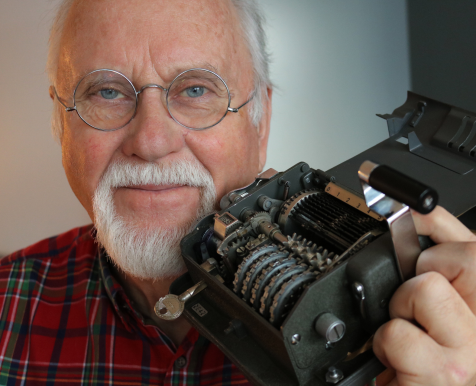
In Memoriam: Sixten Svensson
Sixten Svensson, brother-in-law of Boris Hagelin, founder of Crypto AG, was a pivotal figure in uncovering one of the most significant intelligence deceptions of the Cold War. His insightful book, “The Boris Project” (published in Swedish), remains a key resource on the secret history of Crypto AG’s role in global espionage.
Svensson was also a crucial source for IntelToday’s coverage of the Crypto AG saga. Despite his firsthand knowledge, it is remarkable—and troubling—that neither he nor IntelToday was ever contacted by the United Nations investigators examining the suspicious death of Dag Hammarskjöld.
His contributions continue to shed light on the shadowy intersections of intelligence, technology, and global power struggles.
REFERENCES
DID BRITAIN HELP MURDER AN AFRICAN LEADER AND U.N. SECRETARY GENERAL?
Richard Norton-Taylor, The Guardian, 26 October 2023
‘Significant new evidence’ cited in 1961 death of U.N.’s Hammarskjold
By Carol J. Williams, Sept. 9, 2013
=
From Lumumba to Hammarskjöld: Are We Finally Naming Names? [Belgian Prosecutors Seek to Prosecute Étienne Davignon in the 1961 Assassination Case of Patrice Lumumba]
 Intel Today