
“This particularly adventuresome and resourceful CIA officer should have been remembered from his death in 1950 as a hero and inspiration to generations of CIA operations officers. Instead, he was simply forgotten, even within the Far East (later East Asia) division. His own division chief at the time of Mackiernan’s death, in writing up a classified history of relevant operations 20 years later, mentions him only in passing — and gets both his name and his date of death wrong.”
CIA Historian Nicholas Dujmovic
Amnesia to Anamnesis
Commemoration of the Dead at CIA
(September 2008)
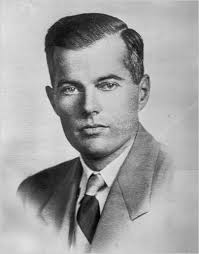
April 29, 2025 — Douglas Seymour Mackiernan (April 25, 1913 — April 29, 1950) was the first officer of the Central Intelligence Agency to be killed in the line of duty. Mackiernan was working in China under cover of the State Department. While trying to escape from China, he was shot, and beheaded, by Tibetan border guards. To this day, no attempts have been made to find and repatriate his remains. Follow us on Twitter: @Intel_Today
RELATED POST : “Silent Stars: The Fallen Heroes of the CIA” — Book Review by ChatGPT
RELATED POST : The CIA Memorial Wall and AI: Why ChatGPT Users Are Visiting IntelToday
RELATED POST : Intel Today Book on CIA Memorial Wall Banned by Amazon
RELATED POST : CIA Memorial Wall — STAR 0 : Jane Wallis Burrell (Paris, France – January 6, 1948) [CIA’s Modern Censorship Battles]
RELATED POST : CIA Memorial Wall — STAR 2 : Jerome P. Ginley (East China Sea – January 11, 1951)
RELATED POST : 60 Years Ago — CIA Memorial Wall — STAR 15 : Eugene `Buster’ Edens (Edwards Air Force Base, California – April 26, 1965)
RELATED POST : CIA memorial Wall — STAR 21 : Walter R. Ray (Hanksville, Utah – January 5, 1967)
RELATED POST : CIA Memorial Wall — STAR 22 : Billy Jack Johnson (Southeast Asia – February 1, 1968)
RELATED POST : CIA Memorial Wall — STAR 26 (CLASSIFIED): Hugh Francis Redmond (Shanghai prison, China — April 13, 1970)
RELATED POST : CIA Memorial Wall — STAR 57 : Richard D. Krobock (El Salvador — March 26, 1987)
Douglas Seymour Mackiernan’s death, while serving as a State Department official, was reported by The New York Times on July 29, 1950. He was, in truth, the first officer of the Central Intelligence Agency to be killed in the line of duty.
His anonymous star is the first of the 31 original stars on the Memorial Wall, dedicated in July 1974.
In a speech to the Agency workforce in 1997, Acting DCI George J. Tenet acknowledged Mackiernan’s sacrifice, stating:
“He is the first star on that Wall, and the space in the book where his name should be is blank… but we claim Doug Mackiernan as one of our own… now, in a sense, we’ve brought him home.”
In 2006, the CIA finally acknowledged Mackiernan’s employment by revealing his name in the CIA’s Book of Honor.
Two years later, in October 2008, his contributions as an agent, particularly his work in atomic intelligence, were publicly recognized by then-CIA Director Michael Hayden
“In fact, the very first CIA officer to die in the line of duty had been gathering data on the Soviet nuclear program.
Douglas Mackiernan served in the desolate reaches of western China, one of those brave operatives who worked our top intelligence target along the periphery of the Soviet Union.
`Mack,’ as he was called, was an MIT physics major conversant in Russian and Chinese, a highly resourceful and perceptive officer who had to work with some pretty basic equipment given the remoteness of his post.
His primary tasks were to investigate Moscow’s access to local uranium deposits and report any signs of nuclear testing in Soviet Central Asia.”
It seems clear that General Hayden took some liberties with the truth and his in-facts…
1) Although it is true that Douglas S. Mackiernan enrolled at the Massachusetts Institute of Technology (MIT) as a physics major in 1932, he discontinued his studies after just one year.
2) The U.S. Air Force, not the CIA, had approached Mackiernan to set up barographic, seismographic, and radiological equipment to detect a possible Soviet atomic explosion.
On August 29, 1949, the Soviet Union detonated its first atomic bomb, “RDS-1” far earlier than the CIA expected.
The equipment set up by Mackiernan at the request of the U.S. Air Force in Central Asia failed to capture any data, as none of it was functioning properly.
3) A significant factor in his tragic death appears to have been a navigation error. Mackiernan believed he was much farther north, and as a result, he underestimated the violence endemic to the Tibetan region.
Despite being well-prepared and equipped for the journey, the exact circumstances surrounding his misjudgment remain unclear.
Last Mission
Before fleeing Xinjiang, Douglas Mackiernan met with Osman Batur, one of the spies he had cultivated during his time in the region.
Mackiernan urged Batur and his network of agents and paramilitary forces to continue resisting the Chinese government.
In response, Osman mobilized over 5,000 militiamen and launched a rebellion in the border areas of Northwest China, including Xinjiang, Gansu, and Qinghai.
Osman and his men were captured in February 1951 and executed two months later.
China invaded Tibet in October 1950, shortly after the onset of the Korean War. In his book, “The CIA’s Secret War in Tibet,” Thomas Laird argues that the CIA had a complex relationship with Tibet during the 1950s and suggests that the agency’s actions may have indirectly influenced the Chinese invasion.
Absolute Failure
When the CIA was formed in 1947 under Director of Central Intelligence Roscoe Hillenkoetter , U.S. intelligence agencies believed that the Soviet Union would not develop an atomic bomb until the mid-1950s.
The assumption was based on the belief that the Soviets lacked the scientific and industrial capacity to produce such a weapon.
Despite reports of the Soviet production of distilled metallic calcium in East Germany — an essential component for separating uranium metal from uranium ore — the CIA significantly underestimated Soviet progress.
These warnings, along with intelligence on Soviet nuclear advances, were overlooked or downplayed. On August 29, 1949, the Soviet Union detonated its first atomic bomb, “RDS-1”, far earlier than expected.
This event shocked the U.S. intelligence community, including the CIA, and profoundly shifted the balance of power in the early Cold War. The failure to detect the Soviet atomic test prior to detonation was a significant intelligence failure.
REFERENCES
Laird, Thomas. Into Tibet: The CIA’s First Atomic Spy and His Secret Expedition to Lhasa. Grove Press, 2002.
=
75 Years Ago — CIA Memorial Wall — STAR 1 : Douglas S. Mackiernan (Tibet – April 29, 1950)
 Intel Today