
“On 4 October 1957, the Soviet Union successfully launched the Sputnik-1 earth satellite into space—an achievement that stunned the American public and press, but not the U.S. policy and intelligence communities. The Central Intelligence Agency (CIA) reported the advancements that led to this landmark launch to President Eisenhower, providing him with the strategic advantage to guide the U.S. response.”
CIA Website
(October 4 2017)

October 4 2024 — On October 4 1957, the Soviet Union launched SPUTNIK-1 into an elliptical low Earth orbit. It was a 58 cm (23 in) diameter polished metal sphere, with four external radio antennas to broadcast radio pulses.
Its radio signal was easily detectable even by amateurs, and the 65° inclination and duration of its orbit made its flight path cover virtually the entire inhabited Earth. This surprise success precipitated the American Sputnik crisis and triggered the Space Race, a key part of the Cold War. The launch ushered in new political, military, technological, and scientific developments. Follow us on Twitter: @INTEL_TODAY
RELATED POST: The VELA Incident: Declassified Files Shed Light on the Nuclear Test Controversy
RELATED POST: THIS DAY IN HISTORY — Stanislav Petrov Saved the World from Nuclear War
RELATED POST: Pompeo Delivers Opening Keynote at 2017 Conference on Ethos and Profession of Intelligence at GW University
“The President’s rapid disenchantment with the project was not lost on Richard Bissell. Fearing for the U-2 program’s survival, he met with the Land committee in early August 1956 to urge them to help make the U-2 less vulnerable to radar pulses. His goal was to reduce the aircraft’s radar cross section so that it would be less susceptible to detection. Edward Purcell had some ideas on this and suggested that he supervise a new project in the Boston area to explore them.”
The Central Intelligence Agency and Overhead Reconnaissance
The U-2 and OXCART Programs (1954-1974)
History Staff Central Intelligence Agency, 1992
UPDATE (March 7, 2025) — Purcell won a Nobel prize in 1954 for his work in nuclear resonance. He served on a number of advisory bodies, including the USAF Scientific Advisory Committee and Edwin Land’s Technological Capabilities Panel study group. He died on March 7, 1997, in Cambridge, Massachusetts, aged 84.
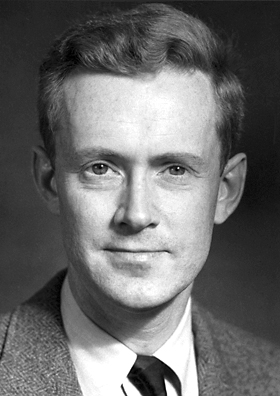
Though Purcell made incredible strides in physics and played a role in shaping modern technology in areas like NMR, his specific contributions to stealth technology for the U-2 are not widely cited.
The development of stealth technology for the U-2 is more often attributed to later figures and engineers working at agencies like the CIA and military research institutions such as the Skunk Works at Lockheed Martin. It was Purcell’s ideas for reducing the radar cross section of the U-2 that led to the OXCART program.
RELATED POST : On This Day — U2 Pilot Francis Gary Powers Exchanged in Spy Swap for KGB Rudolf Ivanovich Abel (February 10 1962)
Purcell proposed solutions for both Radar Cross-Section (RCS) Reduction and the Use of Radar-Absorbing Materials.
“At the direction of the Land committee, Richard Bissell set in motion a project known as HTNAMABLE to establish a proprietary firm called the Scientific Engineering Institute (SEI) in Cambridge. Former Air Force Col. Richard S. Leghorn headed the SEl operation for the Agency when it began on 26 November 1956. SEI was staffed by several MIT scholars who conducted studies and experiments into radar-absorbing materials and techniques proposed by Purcell. The effort, known as Project RAINBOW, got under way by the end of the year.” [The U-2 and OXCART Programs]
Early efforts in stealth technology focused on reducing the radar signature of aircraft. This was done through design strategies that minimized the aircraft’s radar cross-section. Such techniques include using angular surfaces to deflect radar waves and the application of radar-absorbing materials. While these technologies were more developed in the 1970s and 1980s, the groundwork for radar signature reduction was laid in the U-2 era.
“Edward Purcell and Franklin Rodgers had come up with a theory that a continuously curving airframe would be difficult to track with a radar pulse because it would present few corner reflectors or sharp angles from which pulses could bounce in the direction of the radar.” [The U-2 and OXCART Programs]
Although more commonly associated with later stealth aircraft like the F-117 and B-2, early research into radar-absorbing materials was pivotal. These materials help absorb or scatter radar waves, making the aircraft less detectable. The use of advanced composites and other coatings started influencing U-2 aircraft modifications.
“Lockheed’s major innovation in reducing radar return was a cesium additive in the fuel, which decreased the radar cross section of the afterburner plume. This improvement had been proposed by Edward Purcell of the Land committee.” [The U-2 and OXCART Programs]
Purcell’s work serves as a reminder that scientific exploration and innovation are integral to national defense. The close collaboration between scientists, engineers, and military personnel ensures that the tools of national security remain at the cutting edge, reinforcing the critical role that science plays in safeguarding the interests of nations around the world.
END of UPDATE
“That we are not as rich as America is no secret to us. Why then has it happened that we have been capable of solving these most advanced and difficult scientific and technical problems ahead of Americans?”
Sputnik Scientist
UPDATE (October 4, 2024) — As we commemorate Sputnik Day today, it’s worth remembering the profound impact this event had on the world.
The launch of Sputnik on October 4, 1957, by the Soviet Union was a pivotal moment, not just in space exploration, but also in reshaping global scientific research — particularly in the United States. Sputnik served as a major catalyst for the U.S. to invest in science and technology, sparking a sense of urgency about science education and innovation.
This led to initiatives like the Berkeley Physics Course and The Feynman Lectures on Physics, developed in a climate of competition and necessity.
In its efforts to catch up, the United States recruited thousands of young foreign scientists to fill the gaps left by decades of neglect toward hard sciences. These brilliant minds contributed significantly to American achievements in research, technology, and defense, especially during the Cold War. They helped propel the U.S. to the forefront of scientific discovery.
However, with the collapse of the Soviet Union in the early 1990s, the U.S. followed a familiar and unfortunate pattern: it turned its back on many of those who had helped secure its scientific edge. Overnight, many foreign scientists were neglected or abandoned as priorities shifted, and investments in science declined.
Decades later, we are beginning to fully recognize the consequences of these shortsighted policies. At a time when global competition in science and technology is more intense than ever —particularly with nations like China rapidly advancing in AI, quantum computing, and space exploration — the abandonment of scientific talent from earlier decades appears not only as a betrayal of those individuals but also as a critical strategic miscalculation. The ripple effects of these decisions will be felt for a long time.
As we reflect on the legacy of Sputnik, it’s a timely reminder of the need for sustained investment in science and technology and the importance of nurturing, rather than discarding, the global talent that has been so crucial to American leadership.
END of UPDATE
“The timing couldn’t be more fitting, as exactly 60 years ago today, the Soviet Union launched Sputnik-1 into space, stunning the public, but not America’s leaders.”
CIA Director Mike Pompeo
Pride in Moscow
The satellite was a success not just in terms of scientific advancement but in terms of providing a propaganda opportunity for the socialist state.
On Soviet radio, various scientists, such as jet propulsion expert Professor Kirill Stanyukovich, called it “a great victory not only for Soviet science but also for the Soviet order”.
“I think that the very fact that this has been achieved in our socialist country must not be regarded as mere chance,” another academic told listeners.
“That we are not as rich as America is no secret to us. Why then has it happened that we have been capable of solving these most advanced and difficult scientific and technical problems ahead of Americans?”
Several digs at America made their way into reports.
“For 40 years they closed their eyes to the enormous successes of Soviet industry and agriculture,” one radio broadcast said. “Now the most reactionary personalities in the USA are trying to raise some doubts about the tremendous value and great significance of this new success of Soviet science.” [BBC]
CIA Declassified Files (2017)
On October 4 2017, the CIA issued the following message and released a collection of previously classified documents on the Sputnik program.
On 4 October 1957, the Soviet Union successfully launched the Sputnik-1 earth satellite into space—an achievement that stunned the American public and press, but not the U.S. policy and intelligence communities. The Central Intelligence Agency (CIA) reported the advancements that led to this landmark launch to President Eisenhower, providing him with the strategic advantage to guide the U.S. response.
Today, on the 60th anniversary of Sputnik’s first launch, the CIA released a collection of previously classified documents on the Sputnik program. The collection includes CIA’s intelligence and analysis of Sputniks-1, -2, and -3 and the Soviet ballistic missile program from 1955 to the early 1960s. Encompassing 59 documents and 440 pages, the release provides new information to the public, to include memoranda and reports the CIA provided to President Eisenhower, on the Soviet Union’s early space and missile programs.
The entire collection is available here https://www.cia.gov/library/readingroom/collection/intelligence-warning-1957-launch-sputnik and joins previous CIA releases that address the arms race during the Cold War, which are available at https://www.cia.gov/library/readingroom/collection/what-was-missile-gap and https://www.cia.gov/library/readingroom/collection/original-wizards-langley.
In addition, to commemorate CIA’s strategic warning contributions about Sputnik, Studies in Intelligence, part of the Center for the Study of Intelligence, published an article, Sputnik and U.S. Intelligence: The Warning Record, available at https://www.cia.gov/library/center-for-the-study-of-intelligence/csi-publications/csi-studies/studies/vol-61-no-3/sputnik-the-warning-record.html.
In his public remarks today at the fourth annual National Security Conference co-hosted by CIA and George Washington University, CIA Director Mike Pompeo summarized it all by highlighting the release of the Sputnik collection and the fitting theme of the conference, “Achieving Strategic Advantage,” stating, “The timing couldn’t be more fitting, as exactly 60 years ago today, the Soviet Union launched Sputnik-1 into space, stunning the public, but not America’s leaders.”
A sense of urgency in the US: The Berkeley Physics Course
The Berkeley Physics Course is a series of college-level physics textbooks written mostly by UC Berkeley professors.
A Sputnik-era project funded by a National Science Foundation grant, the course arose from discussions between Philip Morrison (then at Cornell University) and Charles Kittel (Berkeley) in 1961, and was published by McGraw-Hill starting in 1965.
The Berkeley course was contemporary with The Feynman Lectures on Physics , a college course at a similar mathematical level.
These physics courses were developed in the atmosphere of urgency about science education created in the West by Sputnik.
1957 – First Satellite in Space (Sputnik)
REFERENCES
Sputnik: 60 Years Later, CIA Releases Declassified Documents — CIA Website
Sputnik: How the Soviet Union spun the satellite launch — BBC
=
On This Day — Soviet Union Launches SPUTNIK (October 4 1957)
 Intel Today