
“We have found that our friend, the Republican nominee, our California friend, has been playing on the outskirts with our enemies and our friends both, he has been doing it through rather subterranean sources. Mrs Chennault is warning the South Vietnamese not to get pulled into this Johnson move.”
President Johnson
Phone call to
Senator Richard Russell
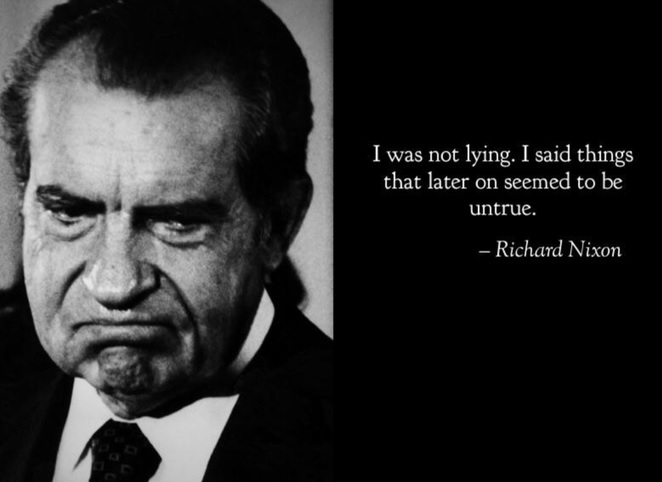
January 23 2025 — Handwritten notes from Nixon’s future White House Chief of Staff, H.R. Haldeman show evidence that the 36th president tried to secretly influence the peace talks while still a presidential candidate and a private citizen. Is it not Treason? Follow us on Twitter: @Intel_Today
RELATED POST: Historian Webster Tarpley: Nixon Was Ousted By The CIA
RELATED POST: Blast From The Past: Nixon & the CIA’s Daily Briefs
RELATED POST: Harvard’s Alan Dershowitz Just Confirmed ‘October Surprise Conspiracy Theory’
RELATED POST: 70 Years Ago — Did Richard Nixon Frame Alger Hiss? [Dec. 6 1948 – The Pumpkin Papers]
RELATED POST: Steven Spielberg to Direct ‘Pentagon Papers’ Film — UPDATE : Film Review
RELATED POST: On this Day — Nixon : “I am Not a Crook” (November 17 1973)
“The story of how Kissinger actively prolonged the Vietnam War for his and Nixon’s political advantage has been told before, notably by Seymour Hersh and in the memoirs of two of Nixon’s secretaries of defense. But Woodward’s use of the tapes adds a new dimension to our understanding. Kissinger’s conduct was not only murderous and ruthless but also, as the tapes reveal, shockingly and almost unbelievably duplicitous.”
Christopher Hitchens
“Deep Throat
and the Death of History”
UPDATE (January 23 2025) — Did Kissinger intentionally sabotage the peace talks?
There is historical debate and speculation about whether Henry Kissinger interfered with the Vietnam War peace negotiations in 1968 to benefit the election campaign of Richard Nixon. This controversy surrounds the events leading up to the U.S. presidential election of 1968.
Though not officially affiliated with Richard Nixon’s 1968 presidential campaign, Kissinger was discreetly advising both sides of the political aisle. He had relationships with Lyndon B. Johnson’s administration and was serving as an informal consultant during the Paris Peace Talks on Vietnam. However, Kissinger allegedly passed information from the peace talks to the Nixon campaign —potentially aiding Nixon’s strategy to delay a settlement until after the election.
There is a lack of clear and direct evidence proving that Kissinger, acting on behalf of Nixon, intentionally sabotaged the peace talks. Nevertheless, there is some evidence to support this claim:
Nixon’s Election and the Delay of Peace Talks:
The peace talks between the U.S. and North Vietnam were scheduled to take place in Paris in the weeks leading up to the 1968 election.
The talks were on the verge of progress, but they were suddenly delayed. South Vietnam, under President Nguyen Van Thieu, expressed reservations and refused to attend, citing concerns about the terms of the agreement.
Anna Chennault’s Role:
Anna Chennault, a Republican operative and a supporter of Nixon, was allegedly involved in conveying messages from the Nixon campaign to the South Vietnamese government, urging them to resist a quick settlement.
Some declassified documents and intercepted communications suggest that Chennault may have played a role in trying to influence South Vietnam’s decision.
Historical Interpretations:
Historians like Seymour Hersh and others have written about these events, suggesting that there was an effort to sabotage the peace talks for political gain.
However, the extent of Kissinger’s involvement and Nixon’s direct knowledge of these activities is still a matter of debate.
Direct U.S. military involvement lasted another five years. From 1969 to 1973, about 19,000 additional US soldiers died in the Vietnam war.
According to the research of Yale University historian Greg Grandin, Kissinger’s actions from 1969 through 1976, have caused the death of about four million people.
I cannot prove that Kissinger intentionally sabotaged the peace talks. But I am quite sure that he would not have hesitated a second if he believed that this was the price to pay for getting himself inside the White House. What do you think?
END of UPDATE
“I saw communists and anti-communists killing and destroying each other because each side believed they had a monopoly on the truth. My voice was drowned out by the bombs, mortars and shouting.”
Thich Nhat Hanh
Zen Buddhist monk (1975)
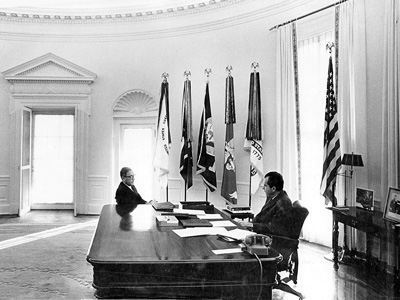
On January 23 1973, President Richard Nixon announces that Henry Kissinger and North Vietnam’s chief negotiator, Le Duc Tho, signed an agreement to end U.S. military involvement in Vietnam.
The official cease-fire, along with the release of all American prisoners of war, is to go into effect on January 28, though troops would remain in Vietnam until the fall of Saigon in 1975.
Flashback
In October 1968, during the Paris Peace Talks, the U.S. was ready to agree to cease bombing Hanoi, the capital of North Vietnam, in exchange for concessions that would halt the decades-long conflict which eventually killed an estimated 58,000 American soldiers, 2 million Vietnamese civilians and 1.1 million North Vietnamese and Viet Cong combatants.
But suddenly, the day before the 1968 presidential election — a close race between Hubert Humphrey and Richard Nixon — South Vietnam inexplicably walked away from the negotiating table.
“For decades, rumors have swirled that Richard Nixon’s presidential campaign had interfered in the Vietnam peace negotiations by sending a messages through Nixon aide Anna Chennault to the South Vietnamese embassy and on to President Nguyen van Thieu.
The Nixon campaign, it was rumored, promised the South Vietnamese bigger concessions if they waited to negotiate peace until after Nixon was elected.
The idea was to not give President Lyndon Johnson and Humphrey a PR victory by suspending the war before the election.
Now, political biographer John Farrell, writing in The New York Times’ opinion section this weekend, reports that handwritten notes from Nixon’s future White House Chief of Staff, H.R. Haldeman show evidence that the 36th president tried to secretly influence the peace talks while still a presidential candidate and a private citizen.”
Direct U.S. military involvement in the war lasted another five years. From 1969 to 1973, about 19,000 additional US soldiers died in the Vietnam war.
Richard Nixon-Address to the Nation on an Agreement to End the War in Vietnam (January 23, 1973)
LBJ: “This is Treason.”
In this clip from the Miller Center’s American Forum, author Ken Hughes introduces audio of a call between LBJ and Senate Republican Leader Everett Dirksen, in which the two discuss secret interference of the Vietnam peace talks during the 1968 election.
Hughes is the author of “Chasing Shadows: The Nixon Tapes, the Chennault Affair, and the Origins of Watergate.”
REFERENCES
Notes Indicate Nixon Interfered With 1968 Peace Talks — By Jason Daley Smithsonian.com (January 2, 2017)
=
On This Day — Nixon Announces Vietnam Peace Agreement (January 23, 1973)
 Intel Today