
“At lunch today in the White House, with only members of the Staff present, Rear Admiral Sidney Souers and I were presented by President Truman with black cloaks, black hats, and wooden daggers, and the President read an amusing directive to us outlining some of our duties in the Central Intelligence Agency [sic], ‘Cloak and Dagger Group of Snoopers’.”
Admiral William Leahy
(January 22 1946)
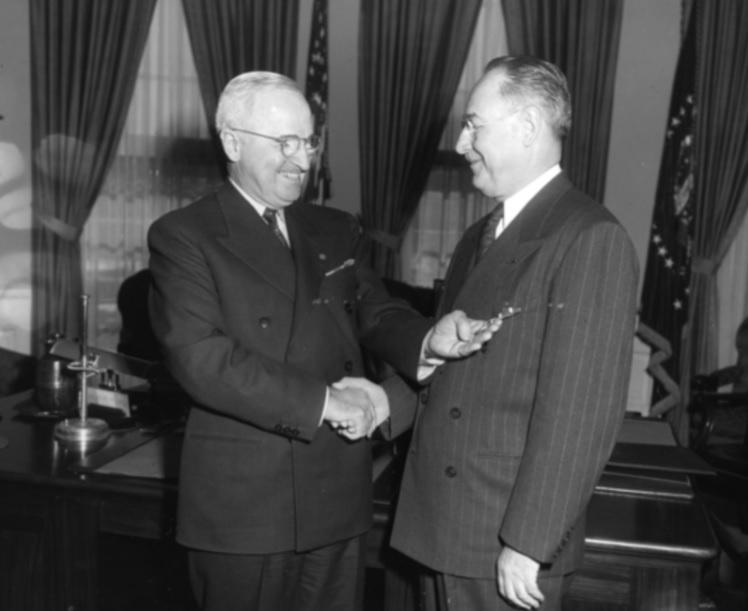
January 22 2025 — On January 22 1946, President Harry S. Truman signed the directive establishing the National Intelligence Authority and the Central Intelligence Group. Follow us on Twitter: @Intel_Today
RELATED POST: On This Day — The Central Intelligence Agency Act Is Signed (June 20 1949)
RELATED POST: CIA — Memorial Ceremony 2018
RELATED POST: Parody –“Party In The CIA” by “Weird Al” Yankovic
RELATED POST: One Year Ago — The long history of CIA involvement in the international narcotics trade — [Documentary]
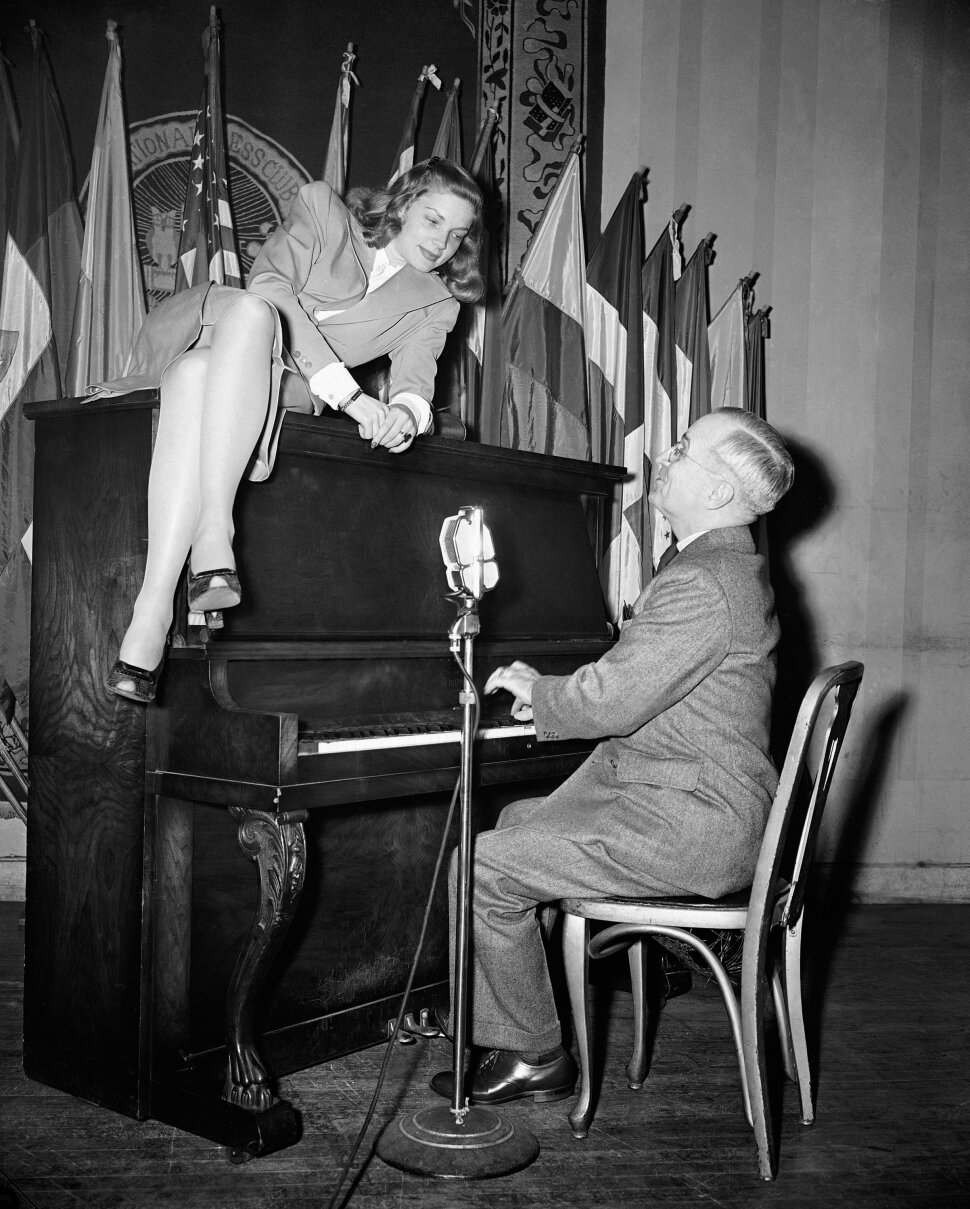
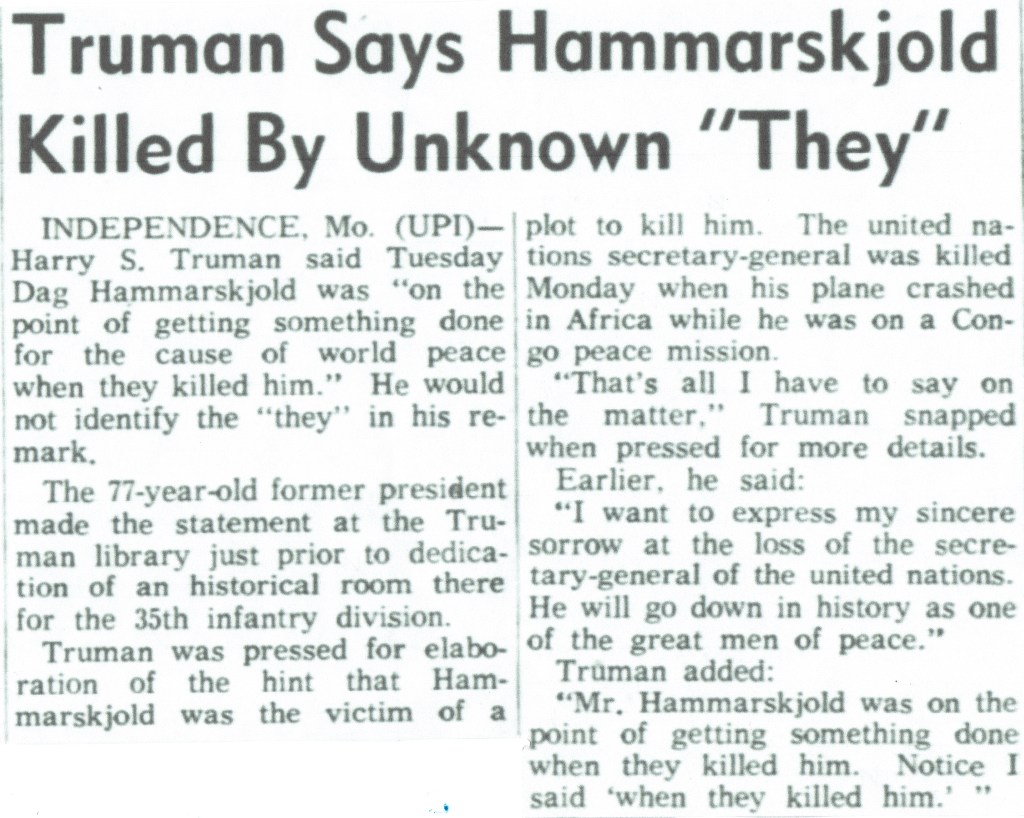
UPDATE (January 22 2025) — The day after the mysterious death of U.N. Secretary-General Dag Hammarskjold (29 July 1905 – 18 September 1961), President Truman told a group of reporters:
“Hammarskjöld was at the point of getting something done when they killed him. Notice that I said ‘when they killed him’.”
For the last six decades, Hammarskjold’ death was ruled an accident, and anyone considering an assassination was dismissed as a conspiracy theorist. Time have changed…
Today, most experts believe that U.N. Secretary-General Dag Hammarskjold was indeed assassinated. One question remains unanswered: Who is ‘they’?
RELATED POST: One Year Ago — Dag Hammarskjold Investigation Reauthorized by U. N. Secretary General
RELATED POST: Dag Hammarskjold — Belgian Intel Agency Fabricated Mercenary Alibi
RELATED POST: Biography — Jan Van Risseghem [Prime Suspect in Hammarskjold Cold case]
Recent investigations, including the U.N.’s official inquiries and independent research, have revealed compelling evidence of foul play—such as intercepted radio transmissions, eyewitness testimonies of a second aircraft in the sky, and the presence of bullet wounds in some of the victims’ bodies.
Ultimately, while no single entity has been definitively identified as “they,” the convergence of Cold War geopolitics, corporate greed, and colonial interests all point to a coordinated effort by powerful forces unwilling to see Africa slip from their grasp.
Declassified documents and testimonies have suggested Western intelligence agencies (CIA, MI6, Belgian Interests) might have been involved in orchestrating his demise to protect their economic and political interests.
The proposed beatification of King Baudouin I of Belgium is a significant and sensitive issue, especially in light of unresolved questions surrounding the death of U.N. Secretary-General Dag Hammarskjöld. Given Belgium’s deep involvement in the Congo Crisis—particularly through its support for the secessionist province of Katanga and its economic interests in the region—any potential complicity in Hammarskjöld’s death raises serious ethical and moral concerns regarding Baudouin’s legacy.
RELATED POST : One Year Ago — Pope Recognizes Martyrdom of the Seven Trappist Monks Murdered in Tibhirine, Algeria (1996)
RELATED POST : On This Day — Remembering Archbishop Oscar Romero (August 15, 1917 — Assassinated March 24, 1980) [Is the CIA to blame?]
Baudouin, as the monarch during Belgium’s controversial decolonization of the Congo, was closely associated with policies that prioritized Belgian economic and political interests over the sovereignty and welfare of the Congolese people. Belgium’s support for the Katangan secession, its ties to powerful mining corporations like Union Minière, and the suspected involvement of Belgian mercenaries in operations against U.N. peacekeeping forces have all been well-documented. If evidence were to confirm that Belgian elements played a role in Hammarskjöld’s assassination—whether through direct action or complicity—this could cast a shadow over Baudouin’s candidacy for sainthood.
The process of beatification requires a thorough examination of the candidate’s life, actions, and moral integrity. It would be prudent, therefore, to suspend any decision regarding Baudouin’s beatification until a full and transparent investigation into Hammarskjöld’s death is completed. The Vatican should ensure that the historical record is clear and that justice is served before making any determinations on Baudouin’s virtue and legacy.
Ultimately, calls for postponing the beatification process are not about undermining Baudouin’s personal faith or commitment but about ensuring that historical accountability is upheld. The moral weight of a saintly title demands scrutiny free from unresolved allegations of wrongdoing, especially when they involve matters of life, death, and global justice.
END of UPDATE
UPDATE (January 22 2024) — Government Agency Ratings remain largely negative. Gallup has periodically asked Americans to rate a variety of federal agencies and departments since 2003. Most of the current ratings are at or below the trend averages, and nine of the 16 agencies are at or near their lowest points in the trend.
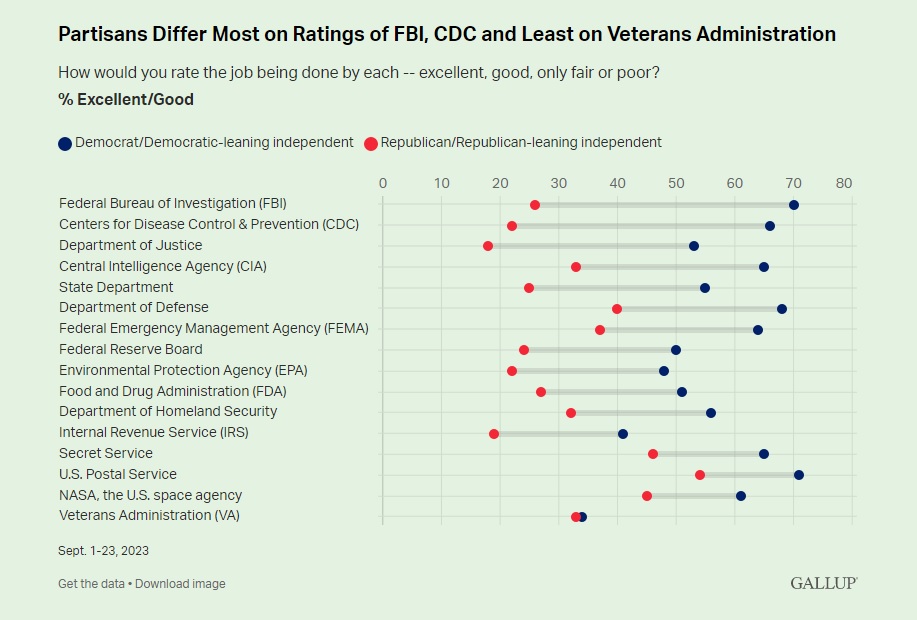
There has been little change in agency ratings since last year. The only significant shift has been a six-percentage-point decrease in Americans’ rating of the CIA.
Bottom Line — Americans’ ratings of most government agencies remain at a historical ebb, as Republicans view them particularly negatively — at or near their lowest points. These weak ratings come at a time of diminished satisfaction with the country’s direction and a lack of confidence in U.S. institutions. [Gallup News, October 2023]
END of UPDATE
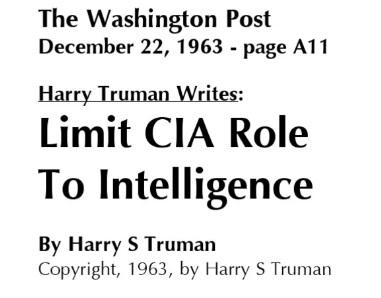
“There is something about the way the CIA has been functioning that is casting a shadow over our historic position and I feel that we need to correct it.”
Harry Truman
(December 22 1963)
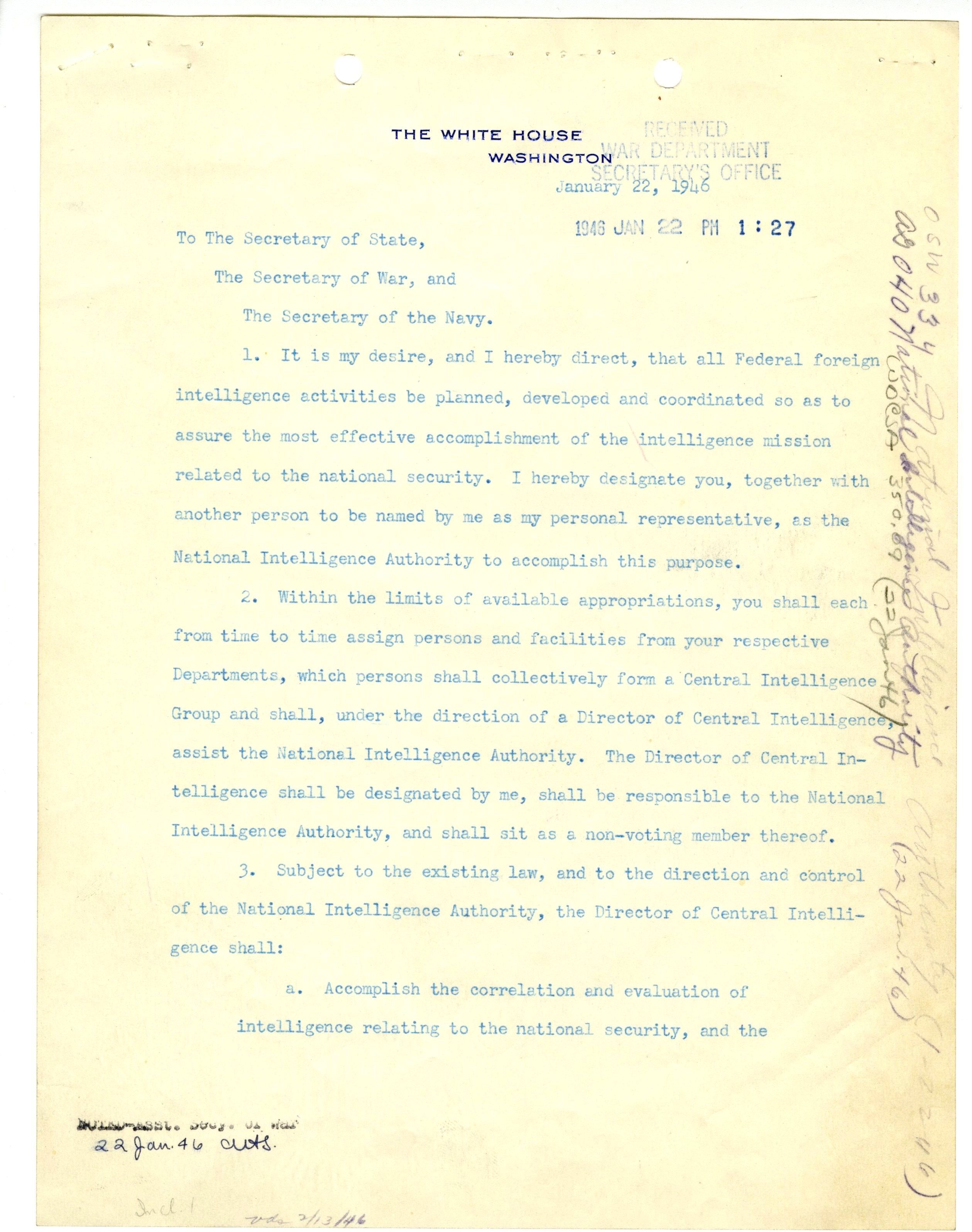
On January 24 1946, President Harry S. Truman appointed the first Director of Central Intelligence, Sidney W. Souers.
The office diary of the President’s chief military adviser, Flt. Adm. William Leahy, records a curious event on January 24, 1946:
“At lunch today in the White House, with only members of the Staff present, Rear Admiral Sidney Souers and I were presented [by President Truman] with black cloaks, black hats, and wooden daggers, and the President read an amusing directive to us outlining some of our duties in the Central Intelligence Agency [sic], ‘Cloak and Dagger Group of Snoopers’.”
With this whimsical ceremony, President Truman christened Admiral Souers as the first Director of Central Intelligence.
Souers had served as Deputy Director of Naval Intelligence during World War II, and before then had been a St. Louis banker and insurance executive, as well as a pillar of the Democratic Party in Missouri.
In late 1945 he had coordinated the various intelligence reform plans considered by the White House in the drafting of the President’s January 22, 1946 directive that created the Central Intelligence Group (CIG).
“CIG was responsible for coordinating, planning, evaluating and disseminating intelligence. CIG also acquired a clandestine collection capability as well as authority to conduct independent research and analysis.
This was key as CIG was no longer just coordinating the intelligence it received from government agencies, but was now producing intelligence on its own. This enlarged CIG’s personnel strength considerably.
The new organization spied overseas with employees lent to it from the Army, Navy and Department of State. CIG functioned under the National Intelligence Authority, which was composed of a presidential representative and the secretaries of State, War and Navy.
Within months of its creation, CIG became the nation’s primary agency for strategic warning and management of clandestine activities abroad.
Yet, it was shackled to the constraints and resistance of the Department of State and the armed services.
And so, to free itself, CIG became an independent department and was renamed the Central Intelligence Agency.”
The CIA was created under the National Security Act of 1947.
Two years later, President Truman signed the Central Intelligence Agency Act, which authorized CIA to secretly fund intelligence operations and conduct personnel actions outside of standard US Government procedures.
By 1963, Truman admitted in writing that he was seriously “disturbed by the way CIA has been diverted from its original assignment.”
“I think it has become necessary to take another look at the purpose and operations of our Central Intelligence Agency.
At least, I would like to submit here the original reason why I thought it necessary to organize this Agency during my Administration, what I expected it to do and how it was to operate as an arm of the President.
(…)
We have grown up as a nation, respected for our free institutions and for our ability to maintain a free and open society.
There is something about the way the CIA has been functioning that is casting a shadow over our historic position and I feel that we need to correct it.” (December 22 1963)
The day after the mysterious death of U.N. Secretary-General Dag Hammarskjold (29 July 1905 – 18 September 1961), President Truman told a group of reporters:
“Hammarskjöld was at the point of getting something done when they killed him. Notice that I said ‘when they killed him’.”
REFERENCES
President Truman Creates the National Intelligence Authority and the Central Intelligence Group, January 22, 1946: The Documents — National Archives
A Look Back … Truman Appoints First DCI, 1946 — CIA Official website
Truman on CIA — CIA Official website
History of the CIA — CIA Official website
=
On This Day — President Truman Creates the Central Intelligence Group (January 22, 1946) [Gallup Poll : Americans’ rating of the CIA]
 Intel Today