
“What we’ve learned is that if you look at history what happened with the Medellin Cartel after we took them down, Cali Cartel got stronger, right? Then we take them down, and North Valle Cartel takes over. We’re taking down cartels, and another cartel is born.”
Javier Pena — Former DEA officer

December 2 2023 — Pablo Emilio Escobar Gaviria (December 1 1949 – December 2 1993) was a Colombian drug lord and narco-terrorist. His cartel supplied an estimated 80% of the cocaine smuggled into the United States at the height of his career, turning over US$21.9 billion a year in personal income. Follow us on Twitter: @INTEL_TODAY
RELATED POST: Colombia — Juan Pablo Escobar: “My Father Worked for the CIA.” [UPDATE]
RELATED POST: The Real Story Behind Netflix’s Narcos
RELATED POST: Remembering “DARK ALLIANCE”: Gary Webb (31 August 1955 – 10 December 2004)
RELATED POST: American Made –Tom Cruise to play Medellin cartel pilot Barry Seal
RELATED POST: The long history of CIA involvement in the international narcotics trade — [Documentary]
RELATED POST: The New Chiquita Papers: “Records Identify Banana Executives who Bankrolled Terror in Colombia”
RELATED POST: The Real CIA NARCOS Story Netflix Ignored
RELATED POST: US REPORT: Colombia’s cocaine production is ‘up’. Really?
“It is worrying that each year there is an increase in coca crops in the country.”
UNODC Regional Director
Candice Welsch
(2023)
UPDATE (December 2 2023) — UPDATE : Colombia Growing Record Amounts Of Coca
Since the death of Pablo Escobar, Washington has contributed more than US$10 billion to Plan Colombia in order to eradicate cocaine production in the country.
The result is not entirely satisfactory. In recent years, Colombia’s coca cultivation has reached an all time high.
According to the last United Nations Office on Drugs and Crime (UNODC) report (September 2023), Coca crops in Colombia covered 230,000 hectares (568,000 acres) in 2022, while potential cocaine output, which rose 24% to 1,738 metric tonnes.
These numbers are the highest ever recorded since the UN started monitoring in 2001. At the time of Escobar’s death, Colombia’s coca cultivation amounted to about 40,000 hectares.
I would like to conclude this update with some thoughts about the impact of cocaine production on the Colombian economy. (All answers to my questions come from ChatGPT.)
How much money does it represent? Answer: US$ 50 billion
Estimating the monetary value of cocaine production involves several factors and can vary depending on various elements such as market conditions, purity levels, and distribution networks. The price of cocaine can differ significantly across regions and time periods.
As of my last knowledge update in January 2022, the price of cocaine in the United States was often cited in the range of $25,000 to $50,000 per kilogram at the wholesale level, while street prices could be considerably higher. However, these figures can fluctuate, and different sources might provide different estimates.
Assuming a conservative wholesale price of $25,000 per kilogram, a production of 2,000 metric tonnes (or 2 million kilograms) of cocaine would have a potential wholesale value of approximately 2,000,000 kg * $25,000/kg = $50 billion.
How does it compare with Colombia GDP?
As of my last knowledge update in January 2022, Colombia’s Gross Domestic Product (GDP) was around $324 billion USD.
So, based on the $50 billion estimate, cocaine production could account for roughly 15.43% of Colombia’s GDP.
Can 15% of illegal money affect economic parameters, including inflation?
Yes, a significant influx of illegal money, such as the estimated value of cocaine production in Colombia, could potentially have an impact on economic parameters, including inflation. However, the extent of this impact would depend on several factors, and it’s important to note that estimating the precise effects can be challenging due to the illicit and hidden nature of the drug trade. Here are some potential ways in which illegal money could affect the economy:
Inflation: Increased illicit funds can contribute to higher levels of spending in the economy, leading to increased demand for goods and services.
If the economy is already operating near full capacity, this increased demand could push prices higher, contributing to inflation.Exchange Rates: Large amounts of illegal money entering the economy can impact exchange rates, especially if it leads to changes in the demand for the national currency.
Income Inequality:The distribution of illegal profits may not be equal, contributing to income inequality in the society.
Government Budget and Public Services: Illicit funds could affect government budgets, as it might reduce the tax base while increasing the demand for public services related to law enforcement, healthcare, and social programs.
Financial System Stability: Large volumes of illegal money could pose risks to the stability of the financial system if not properly regulated or monitored.
Think about that — In Belgium, several cities are currently witnessing a level of violence that was previously totally unheard off. According to well informed actors, there is a real danger that Belgium could become a narco-state. Here is a question. How long will it take to observe inflation being driven up by drug money in Belgium?
END of UPDATE
“Belgium as a state, and Belgium as the heart of the European Union are as close to a vacuum as Europe offers these days. (…) There is a vacuum. Vacuums are dangerous.”
Roger Cohen
The New York Times
(April 11 2016)
Escobar was often called “The King of Cocaine” and was the wealthiest criminal in history, with an estimated known net worth of between US$25 and US$30 billion by the early 1990s (equivalent to between about $48.5 and $56 billion as of 2017), making him one of the richest men in the world in his prime.
A Colombian electronic surveillance team, led by Brigadier Hugo Martínez, used radio trilateration technology to track his radiotelephone transmissions and found him hiding in Los Olivos, a middle-class barrio in Medellín.
With authorities closing in, a gun fight with Escobar and his bodyguard, Álvaro de Jesús Agudelo (alias “El Limón”), ensued.
The two fugitives attempted to escape by running across the roofs of adjoining houses to reach a back street, but both were shot and killed by Colombian National Police.
Escobar suffered gunshots to the leg and torso, and a fatal gunshot through the ear.
It has never been proven who actually fired the final shot into his ear, or determined whether this shot was made during the gunfight or as part of a possible execution, with wide speculation remaining regarding the subject.
Some of Escobar’s relatives believe that he had committed suicide.
His two brothers, Roberto Escobar and Fernando Sánchez Arellano, believe that he shot himself through the ear.
“Pablo committed suicide. He did not get killed. During all the years they went after him, he would say to me every day that if he was really cornered without a way out, he would shoot himself through the ear.”
Roberto Escobar
Who Killed Pablo Escobar? Truth Told by DEA Agents
DEA special agents Javier Peña and Steve Murphy were assigned as the lead investigators targeting Escobar and his organization.
These true American heroes provide a first-hand lesson in history as they discuss their efforts bringing down the world’s first narco-terrorist, the challenges they faced in oftentimes hostile and life-threatening environments, and the innovative strategies they employed to successfully end the reign of terror of the world’s most wanted criminal.
“My father worked for the CIA selling cocaine to finance the fight against Communism in Central America.”
Juan Pablo Escobar
UPDATE (December 2 2019) — Since the death of Pablo Escobar, Washington has contributed around $10 billion (€8.8 billion) to Plan Colombia in order to eradicate cocaine production in the country.
The result is not entirely satisfactory. In recent years, Colombia’s coca cultivation has reached an all time high.
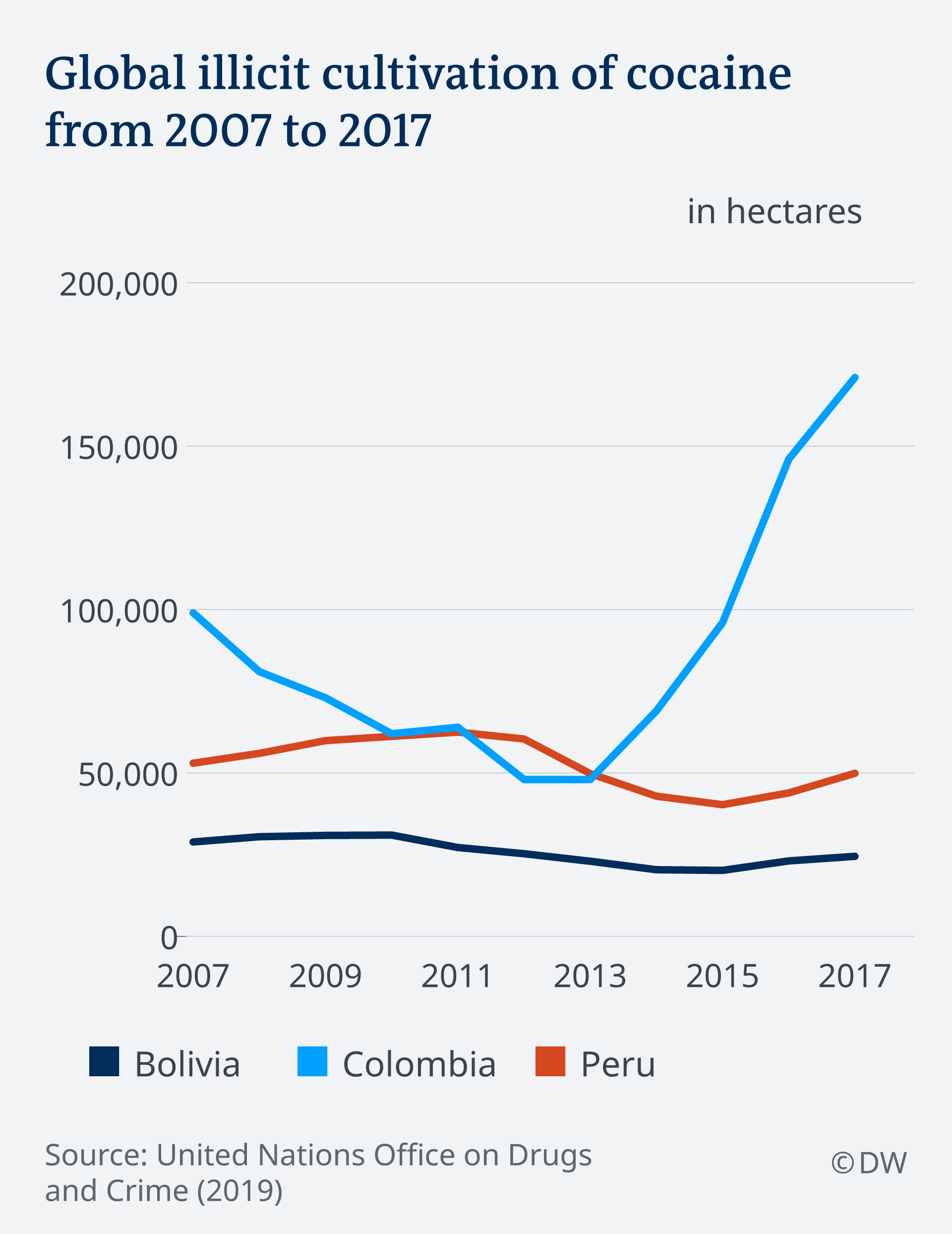
According to the latest annual report from the UN Office on Drugs and Crime (UNODC), Colombia’s cocaine production rose by 25% to reach a record 1,976 tons in 2017, fueled mostly by a rise in cultivation practices, which have increased from 46,000 hectares (about 113,700 acres) in 2013 to 171,000 in 2017.
At the time of Escobar’s death, Colombia’s coca cultivation amounted to about 40,000 hectares.
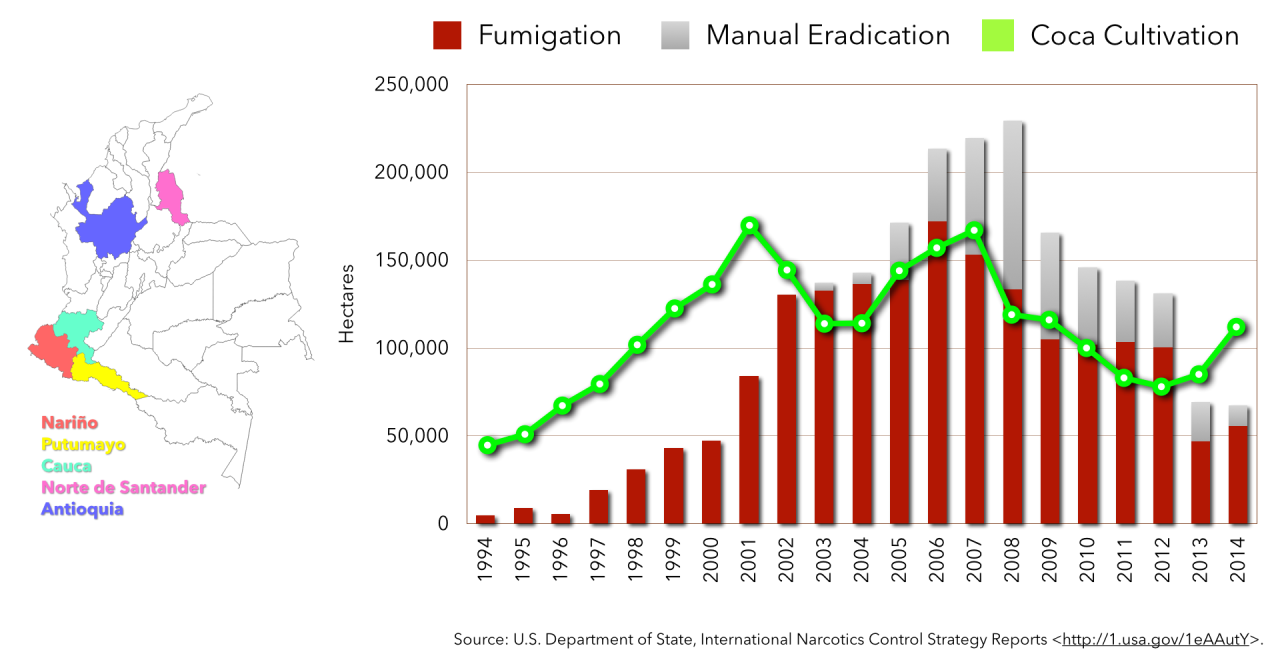
Please, keep in mind that the official statistics about Colombia’s cocaine production should be taken with a ‘pinch of salt’. The estimate is very difficult to make and can be ‘exploited’ to fudge the numbers according to a political agenda.
UPDATE (December 2 2020) — According to the latest report by the Illicit Cultivations Monitoring System (Sistema Integrado de Monitoreo de Cultivos Ilícitos — SIMCI) of the United Nations Office on Drugs and Crime (UNODC), coca crops in Colombia dropped from the 169,000 hectares in 2018 to 154,000 hectares in 2019.
However, despite the 15,000 hectares decrease in coca crops, production of cocaine increased 1.5 percent, to 1,136 metric tons in 2019.
Either the reported large reduction in coca crops is simply wrong or else the narcos demonstrate that, with a bit of strategic thinking, you really can do more with less!
Actually, the UNODC’s drop in coca crops is at odds with figures published in March 2020 by the White House Office of National Drug Control Policy (ONDCP).
The ONDCP reported 212,000 hectares of coca crops in Colombia in 2019 which is a small increase of 4,000 hectares of coca crops from the 208,000 hectares recorded in 2018.
A few years ago, I convinced Colombia lawmakers to adopt the International System of Units. The Republic of Colombia became a Member State of the ‘Meter Convention’ in 2013.
RELATED POST: Havana Syndrome — A Quiet Revolution [May 20 2019]
That is a step in the right direction but obviously the accounting of coca crops still needs a bit of tweaking… Or is it less?
One conclusion is however pretty obvious. Since the death of Pablo Escobar, coca cultivation in Colombia has increased about four-fold. Pablo was a bloody amateur.
END of UPDATE
“These trends show the need to increase holistic approaches that combine economic development, increased government presence and citizen security, seizures and eradication in key rural areas to sustainably reduce cocaine production and build peace in areas affected by conflict.”
U.S. Office of National Drug Control Policy (June 2021)
UPDATE (December 2 2021) — UPDATE : Colombia Growing Record Amounts Of Coca
Since the death of Pablo Escobar, Washington has contributed around $10 billion (€8.8 billion) to Plan Colombia in order to eradicate cocaine production in the country.
The result is not entirely satisfactory. In recent years, Colombia’s coca cultivation has reached an all time high.
The area occupied by coca crops in Colombia expanded to 245,000 hectares at the end of 2020 (15.5% increase from 2019), and cocaine production capacity rose to 1,010 metric tons a year, the U.S. Office of National Drug Control Policy (ONDCP) reported in June 2021. [REUTERS — Colombia coca crop area expanded to 245,000 hectares in 2020]
At the time of Escobar’s death, Colombia’s coca cultivation amounted to about 40,000 hectares…
Once again the ONDCP numbers differ significantly from those published by the United Nations Office on Drugs and Crime (UNODC) on June 9 2021, which indicated the coca crop area declined 7% to 143,000 hectares, but said potential cocaine output rose 8% to 1,228 metric tons a year.
According to the White House Press Release, the U.S.-Colombia counter-narcotics partnership remains strong, but high rates of COVID-19 impacted their overall efforts to reduce coca cultivation…
In a excellent piece [Colombia’s Cocaine Keeps On Reaching New Heights] published by Insight Crime, the authors explain how the amount of powdered cocaine extracted from a single hectare of coca increased by more than one kilogram in just a year. [from 6.7 kilograms per hectare in 2019 to 7.9 kilograms in 2020]
Three factors are possibly allowing traffickers to produce more cocaine from less coca acreage: larger production facilities, better sowing techniques and more cocaine being extracted from leaves.
Please, keep in mind that the official statistics about Colombia’s cocaine production should be taken with a ‘pinch of salt’. The estimate is very difficult to make and can be ‘exploited’ to fudge the numbers according to a political agenda.
“We had an increase in sown hectares and cocaine production that are without precedent in the history of the country.”
Justice Minister Nestor Osuna
(October 2022)
UPDATE (December 2 2022) — Potential production of cocaine in Colombia and the area sown with coca rose last year to their highest levels in two decades of monitoring. [United Nations Office on Drugs and Crime (UNODC)]
Calculated output rose 14% to 1,400 metric tons and the area sown with coca shot up 43% to 204,000 hectares (500,000 acres). Please keep in mind that, at the time of Escobar’s death, Colombia’s coca cultivation amounted to about 40,000 hectares. That is more than a five-fold increase!
Increases in output are due to more productive varieties, better technical assistance and the replanting of coca bushes, the UNODC report said.
And of course… The UN figures contradict recent numbers published by the U.S. White House, which reported potential cocaine output fell last year to 972 tonnes.
END of UPDATE
REFERENCES
Pablo Escobar — Wikipedia
=
On This Day — Pablo Escobar is killed in Medellin (December 2 1993) [UPDATE : Colombia’s cocaine production at record high]
 Intel Today